
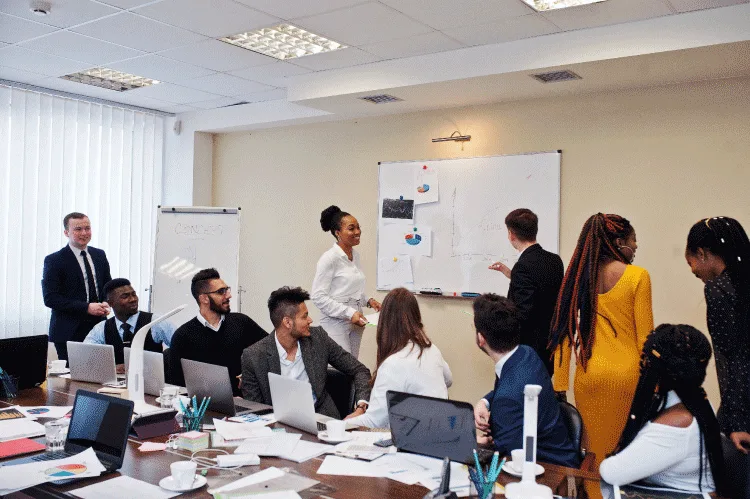
To improve team decision-making and secure genuine team buy-in, it's critical to overhaul outdated decision-making processes. Success hinges on using structured tools and a leadership model that fosters Psychological Safety, ensuring all team members contribute to a shared understanding before making strategic decisions. Effective tools for group decision-making, like facilitated workshops, move beyond endless email threads and transform abstract ideas into tangible models. This approach ensures that all perspectives are integrated into the final choice, making employee buy-in a natural outcome of a process they co-created, which is essential for achieving organizational goals.
The Anatomy of a Team at a Crossroads
Every project manager has faced this moment. The project, once on a clear path, is now stalled at a critical juncture. You're at a crossroads, facing a pivotal decision—be it operational decisions that affect daily workflow or larger business decisions impacting the entire business strategy. The air in the team meeting is thick with unspoken tensions and circular arguments.
The loudest voices dominate, locked in a passionate debate. Quieter team members, who may hold key insights, remain silent. This lack of Diversity of Thought is a critical failure point. You might run a quick SWOT analysis or appoint someone to play the devil's advocacy role, but you can feel it in the room: this isn't alignment. It's temporary compliance. This paralysis doesn't just stall projects; it erodes morale and jeopardizes organizational success.
Why Traditional Decision-Making Methods Fall Short
For decades, the business world has leaned on methods that prioritize speed over substance, often failing to address complex Organizational Dynamics.
- Top-Down Authority: Relying on a solid-line boss to make the call is efficient but disastrous for engagement. It disempowers the team, stifles innovation, and makes successful strategy implementation nearly impossible without genuine employee buy-in.
- Simple Voting: While democratic, voting creates winners and losers, leaving the minority feeling unheard. This is especially problematic in a cross-unit team, where equal partnership is key. It achieves a result but fails to build the unity needed for effective change management.
- The Consensus Method: Seeking 100% agreement sounds ideal but can be painfully slow and often leads to a watered-down compromise that pleases no one. As famed organizational researcher Tasha Eurich points out, true alignment is not about everyone agreeing, but about everyone committing to the path forward.
These methods fail because they mistake silence for agreement. Real commitment isn't secured in a spreadsheet or a vote; it's forged in a process that respects and integrates every voice.
A Better Framework: Building a Shared Understanding
To make tough decisions that stick, you need to shift from "reaching a decision" to "building a shared understanding." When a team builds a rich, mutually understood model of the challenge, the best path forward—the one that aligns with your mission statements and core values—often becomes self-evident.
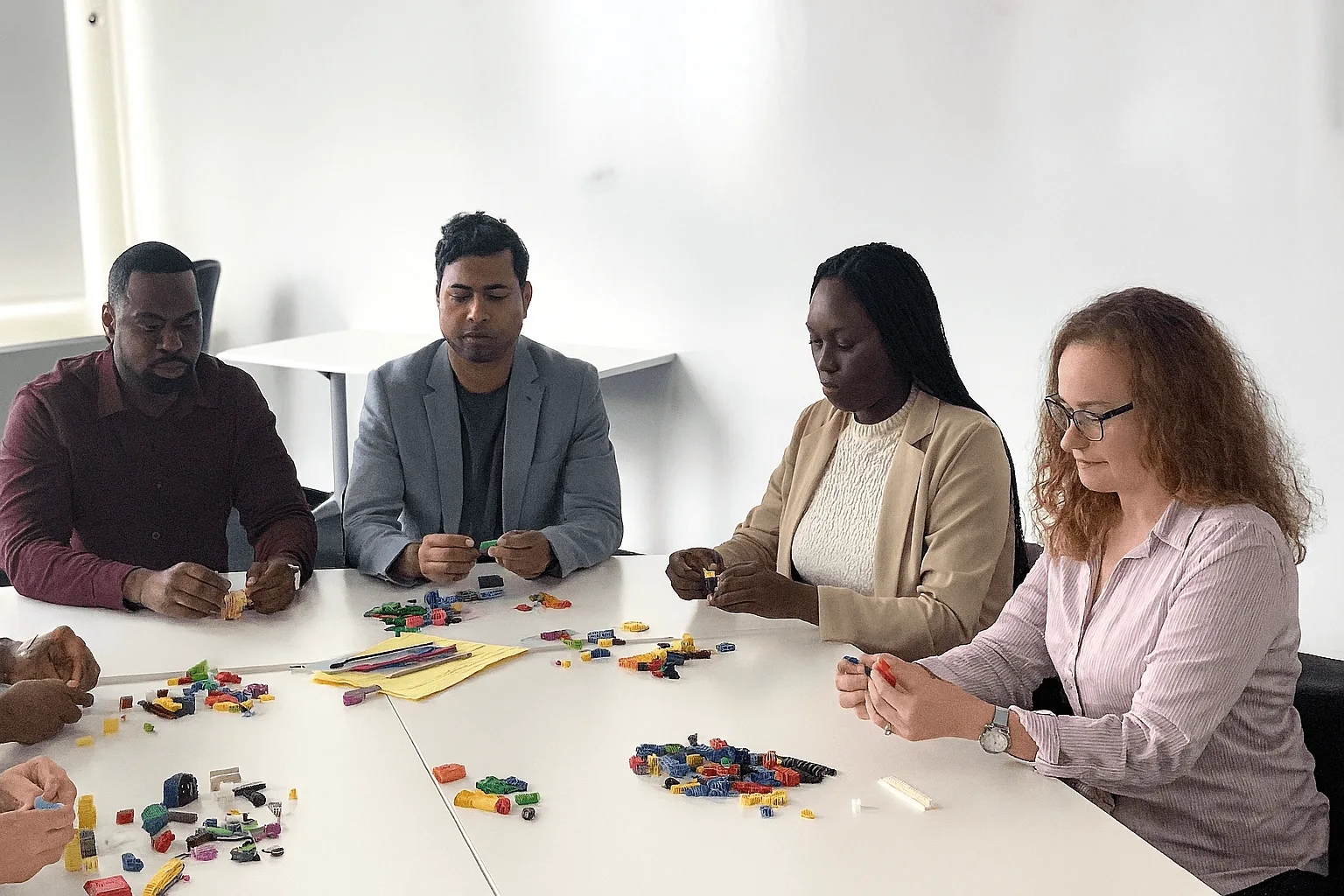
This is where structured, hands-on methodologies come into play. The core principle is to get ideas out of people's heads and onto the table. At Serious Play Business, we leverage the power of LEGO® Serious Play®, a methodology designed for this purpose and lauded in publications like the Harvard Business Review.
- Give Everyone a Voice: The process, guided by a facilitator acting like an Indy 500 pacing car that sets the cadence for constructive conversation, ensures 100% participation. Every person builds their answer, making their perspective visible and discussable.
- Make the Abstract Concrete: What does "synergy" or "market disruption" look like? Building a model makes abstract concepts clear. This process helps the team analyze a shared reality rather than debating competing opinions.
- Construct a Shared Model: The individual models are integrated into a single, shared landscape. This is where the magic happens. The team sees how their individual pieces connect to the larger system, and the decision emerges from this shared creation. This is Collaborative Leadership in action.
The Science of Genuine Buy-In
This approach is grounded in fundamental principles of human psychology and organizational science.
- Psychological Safety: The term, popularized by Amy Edmondson of Harvard Business School, describes a climate where people feel safe to speak up and be vulnerable. The structured, "hands-on" nature of a facilitated workshop naturally lowers defenses and encourages risk-taking, creating a safe space for candor.
- Defined Decision Rights: The process clarifies who has input versus who makes the final call. This clarity, a concept explored by experts like Len Schlesinger, prevents ambiguity and ensures that once the collective intelligence is gathered, the decision can be made decisively.
- Stakeholder Buy-In: The process isn't just for internal teams. You can use stakeholder mapping and stakeholder analysis to identify key external players and even include them in the process. Effective stakeholder communication, tracked with stakeholder software, ensures that you earn the social license to operate and implement major organisational change.
When you finish a session like this, the team doesn't need a memo to understand the new strategic plan. They don't need to be "sold" on the decision because they already own it.
Frequently Asked Questions (FAQ)
Q: How does this process improve our overall leadership skills?
A: This methodology is a powerful training ground for Collaborative Leadership. It teaches leaders to ask better questions, listen more effectively, and trust their team's collective intelligence. It shifts the Leadership Model from a director to a facilitator of great thinking.
Q: Can we use Digital Tools or Data Analytics Tools with this process?
A: Absolutely. While the building is hands-on, the insights generated can and should be informed by data. You can use Data Analytics Tools to frame the challenge and Project Management Software like Asana or Trello to execute the decision and manage the subsequent strategy implementation.
Q: How does this fit into a larger change management strategy?
A: It's a foundational first step. Securing deep employee buy-in at the decision-making stage makes the entire organizational change process smoother. When people understand the "why" because they helped create it, they become champions of the change rather than obstacles to it.