
Executive Summary: Although organisations invest heavily in leadership workshops, behaviour, decisions, and outcomes often remain unchanged. However, this is not a facilitation quality issue. Instead, it is a methodological failure.
This article defines leadership workshop effectiveness as the ability to create durable organisational capability, rather than just momentary engagement. First, it explains why most leadership workshops fail to translate insight into action. Then, it explores the systemic and cognitive reasons behind this failure. Finally, it positions the LEGO® SERIOUS PLAY® Method as a capability-building approach designed specifically for complex organisational systems.
The Problem: Engagement Without Capability
Leadership workshop effectiveness is commonly measured through participation, satisfaction scores, and perceived insight. However, these metrics primarily assess experience, not impact. While many workshops succeed at creating energy, encouraging reflection, and generating discussion, they often fail at changing decision patterns. Consequently, strategic behaviour remains unaltered, and execution coherence does not improve.
Ultimately, engagement is an experience, whereas capability is a structural change. Therefore, when organisations confuse engagement with effectiveness, workshops become performative events rather than strategic interventions.
The Organisational Cost of Ineffective Leadership Workshops
The cost of ineffective leadership development is cumulative and often invisible. For instance, common consequences include:
- Repeated workshops addressing the same issues
- Cynicism among senior leaders
- Learning fatigue without behaviour change
- Disconnection between development and strategy execution
Furthermore, conservative estimates suggest that 30–50% of leadership development investment fails to translate into measurable organisational impact. Over time, this failure weakens confidence in development functions and simultaneously undermines strategic change initiatives.
Why Traditional Leadership Workshops Fail
Most leadership workshops rely on three flawed assumptions. Specifically:
- Insight automatically leads to action: However, awareness alone does not rewire decision systems or incentive structures.
- Discussion creates shared understanding: While valuable, conversation often reveals opinions rather than deep mental models.
- Individual learning scales to organisational capability: In reality, capability emerges from shared structures, not just individual insight.
Ultimately, learning that remains individual cannot become organisational capability. Although traditional workshops optimise for reflection and discussion, complex organisations actually require collective sensemaking and system alignment.
The Cognitive Foundation: Capability Emerges From Shared Mental Models
Fundamentally, organisational capability depends on how leaders interpret information, frame problems, and coordinate decisions across boundaries. In fact, these behaviours are governed by shared mental models, not personal insight.
However, mental models are largely implicit, reinforced by organisational systems, and resistant to change through discussion alone. Consequently, organisations change when shared mental models change, not merely when individuals feel inspired. This situation creates a structural constraint for traditional leadership development: capability cannot be built without externalising and reshaping collective thinking.

LEGO® SERIOUS PLAY® as a Capability-Building Method
Notably, the LEGO® SERIOUS PLAY® Method is uniquely suited to building leadership capability because it operates at the level of shared cognition.
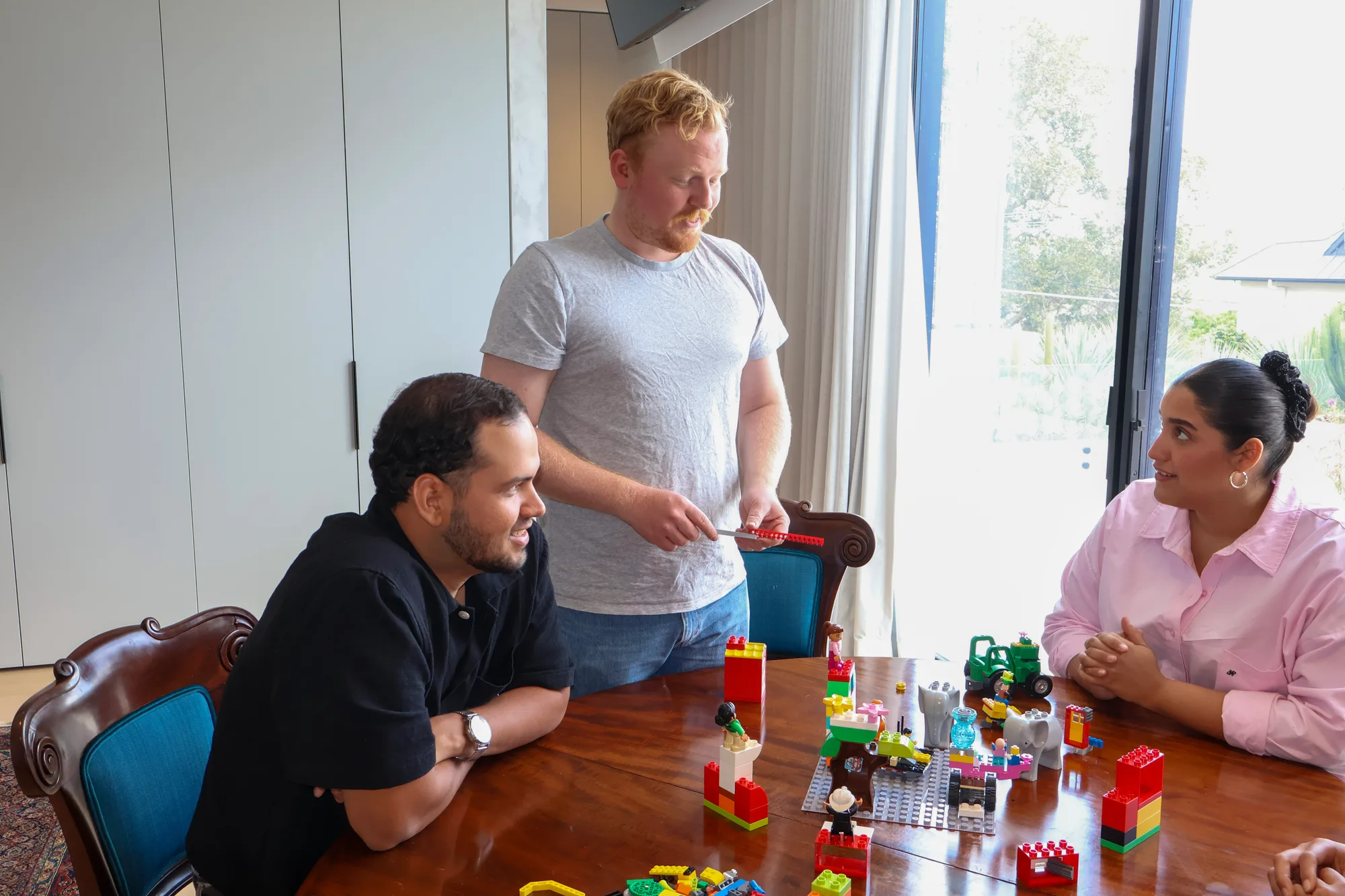
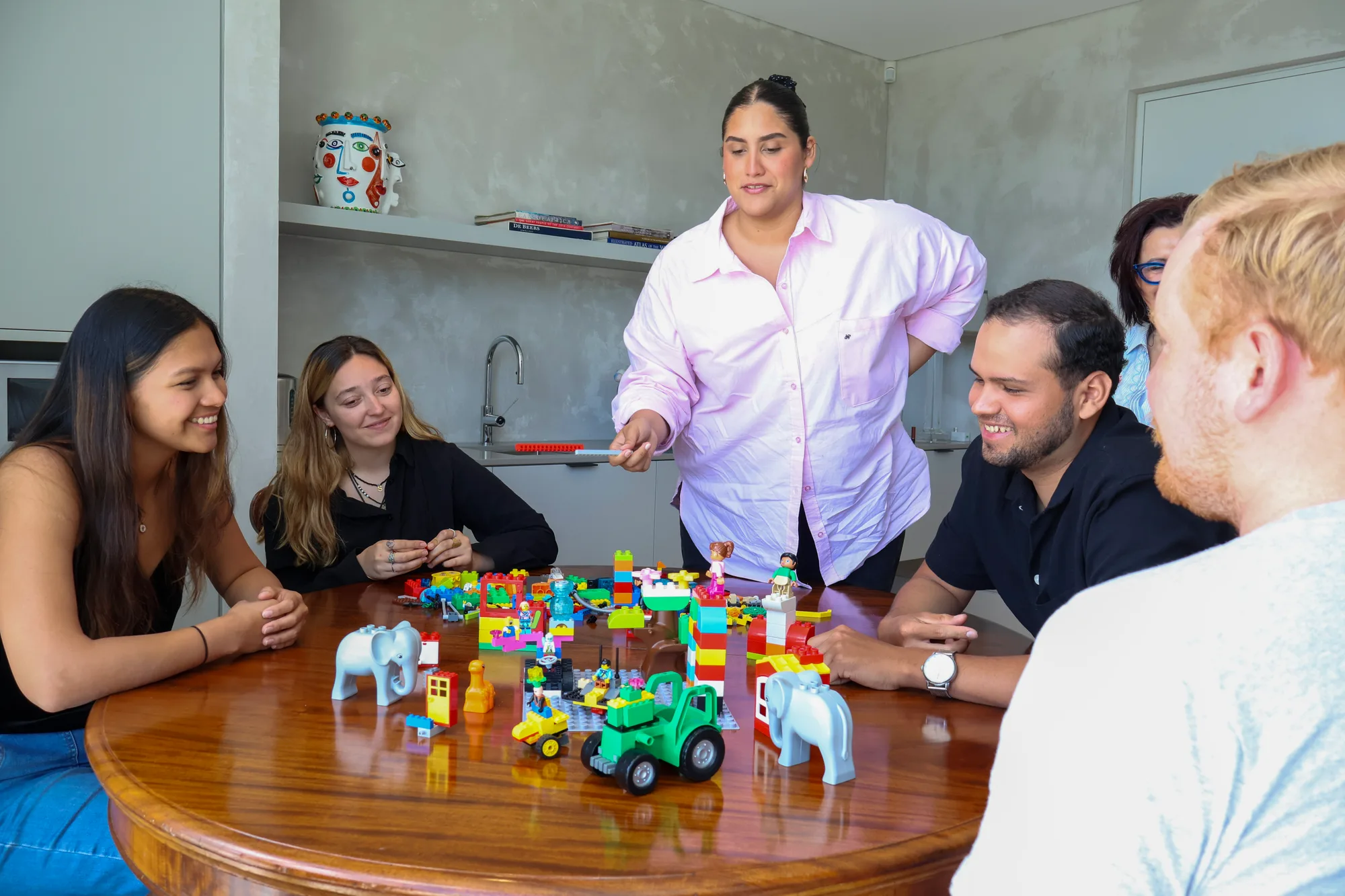
What the method does differently: Leaders construct models representing how they understand leadership, strategy, and systems. As a result, thinking becomes visible, comparable, and integratable. Furthermore, capability is embedded in shared structures, not individual reflection.
In essence, LEGO® SERIOUS PLAY® builds capability by changing how leaders think together, not just what they talk about. Thus, this shifts workshops from engagement events to systemic interventions.
Practical Workshop Implementation: Designing for Effectiveness
To begin with, below is a reference-grade workshop outline designed to build durable leadership capability.
Click the '+' button below to view the workshop steps.
Step 1: Individual Leadership Models (45–60 minutes)
First, participants build models answering: “How leadership actually operates in this organisation.” Focus areas include decision authority, informal influence, constraints, and enablers. Outcome: Reality replaces aspiration.
Step 2: Capability Gap Mapping (60 minutes)
Next, models are compared to strategic requirements. Gaps between current and required capability are identified. Additionally, structural constraints are named explicitly. Outcome: Capability gaps become visible and non-personal.
Step 3: Shared Capability Model Construction (90 minutes)
Then, leaders co-create a model representing required leadership behaviours, system enablers, feedback loops, and dependencies. The model integrates strategy, culture, and governance. Outcome: Leadership capability becomes a shared system.
Step 4: Embedding and Accountability Design (45–60 minutes)
Finally, capability elements are linked to decision forums, performance indicators, and governance mechanisms. Outcome: Capability is anchored in organisational systems.
Outcomes and Strategic Relevance
For example, organisations that redesign leadership workshops around capability building report improved decision coherence across functions. Furthermore, they often see faster execution alignment (typically a 20–40% improvement) and reduced reliance on repeated development interventions. More importantly, leadership development becomes strategically relevant, directly supporting execution, change, and resilience.
Frequently Asked Questions (FAQ)
What defines leadership workshop effectiveness?
The extent to which a workshop creates durable changes in leadership behaviour, decision-making, and execution.
Why don’t most leadership workshops work?
Because they prioritise engagement and insight over shared capability and system integration.
Can engagement still matter?
Yes, but engagement without structural change does not create impact.
How does LEGO® SERIOUS PLAY® improve workshop effectiveness?
By externalising thinking, integrating mental models, and embedding outcomes into organisational systems.
Is this suitable for senior leaders?
Yes. It is specifically designed for complex leadership and strategy environments.