
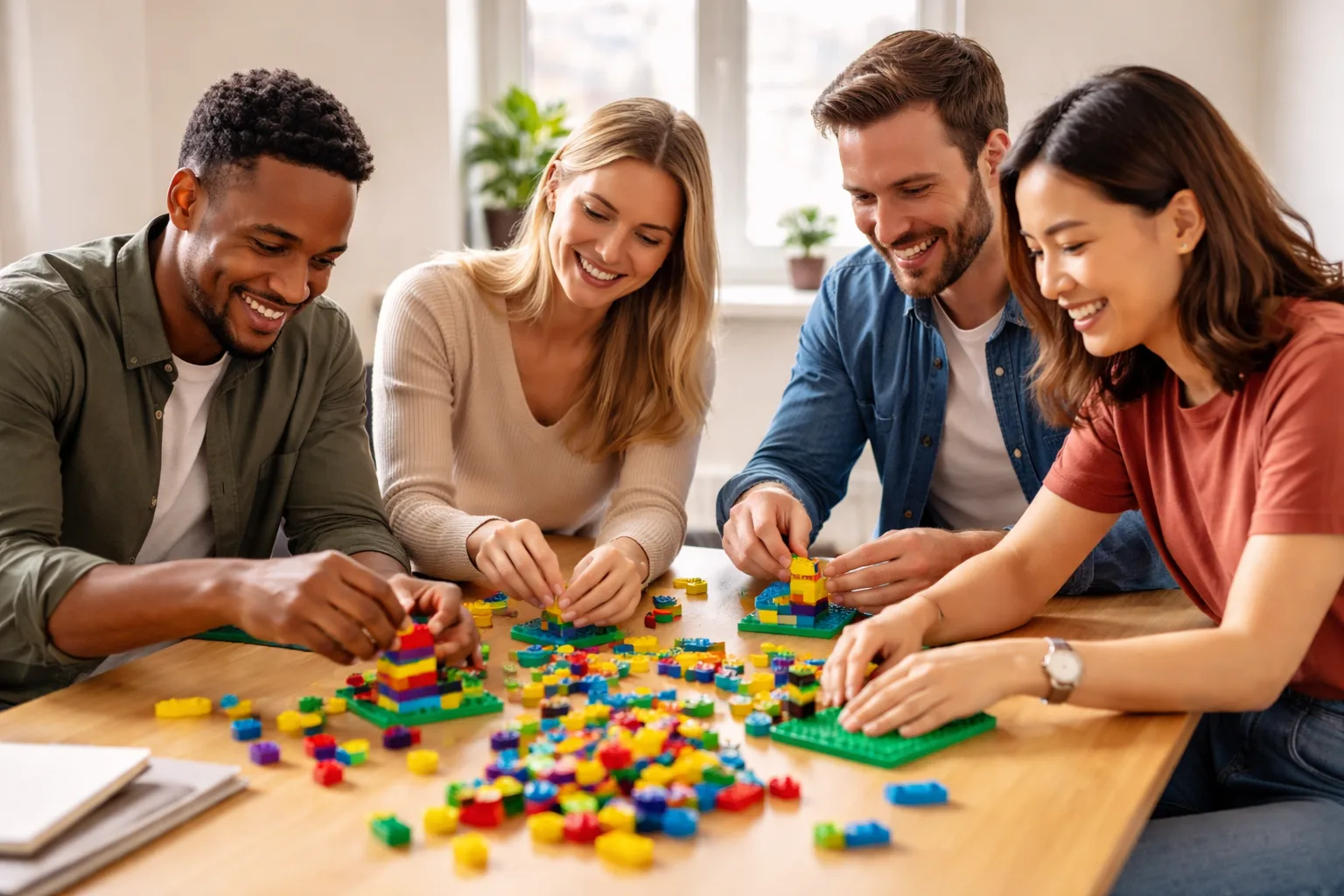
LEGO® SERIOUS PLAY® for organizations actively helps teams make assumptions visible. Furthermore, it aligns perspectives and clarifies highly complex business challenges.
In 2026, this methodology has become increasingly relevant. Currently, leaders work in intense environments. Deep uncertainty, hybrid collaboration, and rapid technological change constantly shape these environments. Moreover, pressure for inclusion, trust, and speed grows daily. Therefore, traditional approaches often fall short.
This method matters immensely for professionals managing leadership, culture, and strategy. Specifically, it converts abstract discussion into highly visible models. Consequently, this transformation leads directly to more precise dialogue. It also builds a significantly better shared understanding. Instead of relying solely on verbal debate, participants creatively build metaphorical models. Ultimately, these models powerfully represent strict priorities, hidden constraints, dangerous risks, and untapped opportunities.
Insight 1: Strategic confusion persists because organizations lack shared visibility. Specifically, they do not see exactly how people interpret the same reality.
What Is LEGO® SERIOUS PLAY® for Organizations?
LEGO® SERIOUS PLAY® operates as a carefully facilitated workshop methodology. It actively uses model building, vivid metaphor, and deep storytelling. It also leverages shared reflection to decisively help groups explore complex business issues. Ultimately, it matters because organizations function as massive systems of interdependent forces. Often, those complex forces prove far too difficult to understand through static slides alone.
Facilitators effectively use the method by asking participants to thoughtfully build physical models. These builds directly respond to carefully designed questions. Subsequently, those models become highly visible representations of complex thinking. This visibility naturally leads to far deeper reflection and much more balanced participation. When people build before they speak, they consistently surface brilliant ideas. Otherwise, those ideas would remain totally hidden in conventional meetings.
In leadership contexts, this unique process creates a significantly more accurate picture. It reveals exactly how individuals perceive purpose, authority, and deep trust. Furthermore, within massive change initiatives, it brilliantly exposes rigid structural constraints. Teams may vaguely sense these constraints, but they simply cannot articulate them easily. Additionally, facilitator certification journeys actively teach professionals how to design robust sessions. Consequently, these sessions smoothly move teams from raw insight directly to concrete action.
The Organizational Cost of Invisible Thinking
Invisible thinking undeniably creates visible cost. Therefore, this stands as a central business reason to enthusiastically use this method.
When core strategic assumptions remain completely unspoken, teams inevitably duplicate work. They also severely delay crucial decisions and wildly misread key priorities. For instance, a leadership team may confidently believe it has perfect alignment. They assume this simply because everyone nodded in agreement inside the boardroom. However, surface agreement does not equal deep, shared understanding. This massive gap directly weakens execution across all departments. Consequently, this weakness leads to intense friction, costly rework, and slower response times.
In many modern organizations, the pace of change has accelerated sharply. Consequently, managers and employees must quickly interpret far more complexity in less time. When that dangerous overload happens, verbal discussion quickly becomes overwhelmed. Sadly, overloaded discussion consistently rewards loud confidence over genuine clarity.
A highly structured workshop effectively helps reduce that specific problem. It boldly externalizes complex ideas into a highly visible landscape. Participants clearly see the intricate relationships between top priorities and stubborn barriers. Once those complex relationships become fully visible, the resulting conversation immediately becomes far less personal.
Insight 2: Organizational misalignment proves incredibly costly. People execute from entirely different mental models. Meanwhile, they falsely assume they are working from the exact same strategy.
Why Traditional Strategic Meetings Often Fail
Traditional strategic meetings often fail spectacularly. Usually, organizers design them around mere speech, hierarchical status, and rushed speed. Instead, they should prioritize deep reflection, clear visibility, and true sense-making. That specific design flaw matters immensely. Complex human systems cannot possibly be understood well when only the fastest voices dominate.
In a conventional meeting setting, people usually present highly polished thoughts. While that sounds wonderfully efficient, it often aggressively filters out raw uncertainty. Furthermore, it hides healthy contradiction and vital emerging insight. Participants instinctively defend their entrenched positions rather than curiously explore new assumptions. As a direct result, the meeting can easily produce apparent, polite consensus while leaving deeply underlying tensions completely untouched.
This dynamic proves especially problematic during massive transformation, intense restructuring, or tricky leadership transitions. These massive issues heavily involve complex feedback loops and fiercely competing incentives. Ultimately, a purely verbal format rarely gives the group enough structure. They need better tools to explore those vital interdependencies properly.
Insight 3: Meetings heavily underperform when strict hierarchy shapes the airtime. The organization hears rank far more clearly than it hears reality.
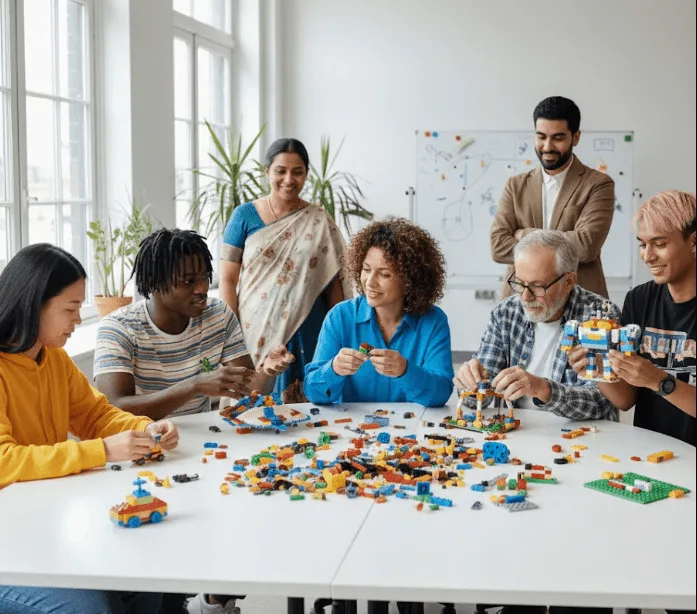
The Cognitive Foundation: Why Building Improves Strategic Thinking
The cognitive foundation of LEGO® SERIOUS PLAY® remains incredibly important. Unfortunately, many people misunderstand the method as mere novelty. In reality, it provides a highly disciplined way to support deep thought. It also enhances sharp memory, shared meaning, and productive dialogue.
The methodology heavily draws from constructionist thinking. This theory strongly suggests that people learn vastly more effectively. Specifically, they learn better when they actively build physical representations of their ideas. In busy organizational settings, this matters greatly. Many vital strategic issues are highly abstract or intensely emotionally loaded. Furthermore, they are extremely difficult to describe using standard linear language.
When participants build physical models, they do not just decorate simple concepts. Instead, they actively create a highly structured bridge. This bridge connects their tacit knowledge directly to a productive shared conversation. This hands-on process drastically reduces cognitive overload. Facilitators safely place much of the complex thinking into a physical form. Consequently, this leads to far more thoughtful, measured interpretation. Finally, it results in significantly less reactive, defensive debate.
Insight 4: Physical models drastically improve strategic dialogue. Powerful metaphors actively allow people to express deep complexity. They do this without dangerously reducing it to oversimplified language.
How LEGO® SERIOUS PLAY® Applies in Organizations
The method applies brilliantly wherever eager leaders urgently need far better visibility. They also need stronger participation and vastly clearer alignment across any highly complex issue. The robust method proves particularly effective when the core challenge is heavily strategic. Furthermore, it works well for deeply relational, intensely cultural, or broadly systemic issues.
Common High-Impact Applications
- Strategy and alignment: Teams build distinct current-state and future-state models of the organization. Then, they identify the rigid structural constraints preventing forward movement. This matters immensely. Strategy often fails miserably in execution. Typically, this happens when the organization fails to surface the stark difference between stated priorities and lived reality.
- Leadership development: Leaders thoughtfully build personal models of leadership identity and team trust. They also model formal authority, open communication, and desired company culture. This helps greatly because leadership forms a highly interconnected system of deep beliefs and active behaviors. Consequently, this leads to far more durable development than simply checking off standard competency lists.
- Organizational change: Teams actively model the intense pressures currently affecting a massive transformation. For instance, this includes hidden resistance, deep uncertainty, tight dependencies, and invisible risks. Ultimately, this heavily improves change work. The entire system becomes highly visible long before leaders design costly interventions.
- Team effectiveness and psychological safety: Participants safely build exactly what helps or severely blocks their absolute best work. This proves incredibly useful. Stressed teams desperately need an objective, neutral way to openly discuss highly difficult patterns. They must do this without defensively assigning personal blame.
What a Practical Workshop Looks Like
A truly great workshop is never improvised. Facilitators meticulously design it with highly clear sequencing. They also use fiercely disciplined facilitation and deeply purposeful reflection. That matters immensely. The overall quality of the method depends heavily on the exact quality of the facilitator.
Click the '+' button below to explore a reference-grade strategy alignment session.
Example Workshop: Strategy Alignment Session
Audience: Leadership team or cross-functional management group
Duration: 3.5 to 5 hours
Facilitator role: Guide attention, frame sharp questions, fiercely protect equal participation, and capture deep systemic themes.
- Frame the business challenge (15-20 minutes): The facilitator clearly defines the exact session objective and strict participation agreements. They also outline the expected outputs. This step matters greatly. Unclear, sloppy framing instantly creates vague models. This inevitably leads to a highly weak strategic conversation.
- Skill-building warm-up builds (20-30 minutes): Participants rapidly complete short, fun builds to effectively learn metaphor. They also practice safe model sharing and reflective language. The facilitator masterfully uses these quick builds. Consequently, they establish high confidence and deep inclusion safety.
- Individual current-state models (30-45 minutes): Each participant silently builds a detailed model. This model represents exactly how they see the organization today. This is absolutely essential. High strategy quality depends completely on first understanding the present reality. Teams must do this rather than jumping prematurely to assumed solutions.
- Model sharing and meaning extraction (30-40 minutes): Every single participant explains their personal model. Then, the facilitator asks sharp, pattern-seeking questions. They meticulously record recurring themes, hidden tensions, and rigid structural constraints.
- Shared landscape build (40-60 minutes): Participants collaboratively combine their key elements into one massive, unified system model. This step matters deeply because organizational problems are heavily interdependent. Therefore, teams must tightly integrate isolated, personal insights into a highly visible whole.
- Future-state or aspiration model (30-45 minutes): The entire group builds exactly what the organization must become. This ensures they successfully meet their bold strategic aims. The facilitator actively probes for hidden capability gaps. They also look for required leadership shifts and vital cultural enablers.
- Bridge-building and intervention design (30-40 minutes): Participants clearly identify exactly what must change between the current state and the desired future state. This heavily includes new priorities and stubborn blockers. It also clarifies clear ownership and immediate early actions.
- Reflection and strategic commitments (15-20 minutes): The session powerfully closes with firm commitments and massive key insights. It also establishes highly specific next-step actions. Reflection matters immensely. Raw insight without direct translation into actual organizational behavior creates zero lasting value.
Why Facilitation Quality Matters More Than Bricks
The bricks are merely tools. In contrast, the true transformation comes entirely from the facilitation design.
This stark distinction matters greatly. Smart organizations do not invest heavily in the method simply for fun novelty. Instead, they invest heavily in it for highly concrete outcomes. These include far better dialogue and sharp strategic clarity. They also seek deep culture insight, elite workshop quality, and massive implementation confidence. Ultimately, those vital outcomes depend entirely on the trained facilitator. The facilitator must expertly frame questions, logically sequence builds, accurately interpret patterns, and fiercely maintain psychological safety.
Insight 5: Teams align vastly faster when they can directly inspect a massive shared model. Highly visible systems are infinitely easier to question than totally invisible assumptions.
Strategic Relevance in 2026
In 2026, smart organizations operate inside intensely overlapping pressures. For example, they face rapid AI adoption and messy hybrid collaboration. They also navigate exhausting constant change and deep workforce fatigue. Furthermore, they experience widening capability gaps and sharply rising expectations around genuine inclusion and fairness. These heavy pressures are deeply interconnected. Therefore, successful leaders desperately need robust methods. These methods must securely hold massive complexity without dangerously oversimplifying it.
That is exactly why this method is increasingly viewed as highly strategic. It actively helps groups clearly see entire systems, not just isolated symptoms.
Frequently Asked Questions (FAQ)
What is LEGO® SERIOUS PLAY® for organizations?
It is a highly facilitated methodology. It actively helps teams deeply explore strategy, leadership, culture, and massive change. Participants use hands-on model building and highly structured reflection. Facilitators heavily use it to make complex thinking visible. Consequently, this drastically helps groups improve tight alignment, equal participation, and overall decision quality.
Why does it work better than a normal meeting?
It often works much better than a normal meeting. It strictly requires every single participant to build and share deep meaning. Consequently, this leads to vastly broader participation and much clearer insight. A normal meeting often heavily privileges high rank and loud confidence. In contrast, this method creates a far more balanced, democratic way to safely explore intense complexity.
Is facilitator certification really important?
Yes. Facilitator certification matters immensely. The overall quality of the session depends entirely on the trained facilitator. They must expertly frame questions and safely guide reflection. Furthermore, they must accurately translate plastic models into highly actionable business insight. Certification effectively helps professionals apply the strict method with immense confidence and high rigor.
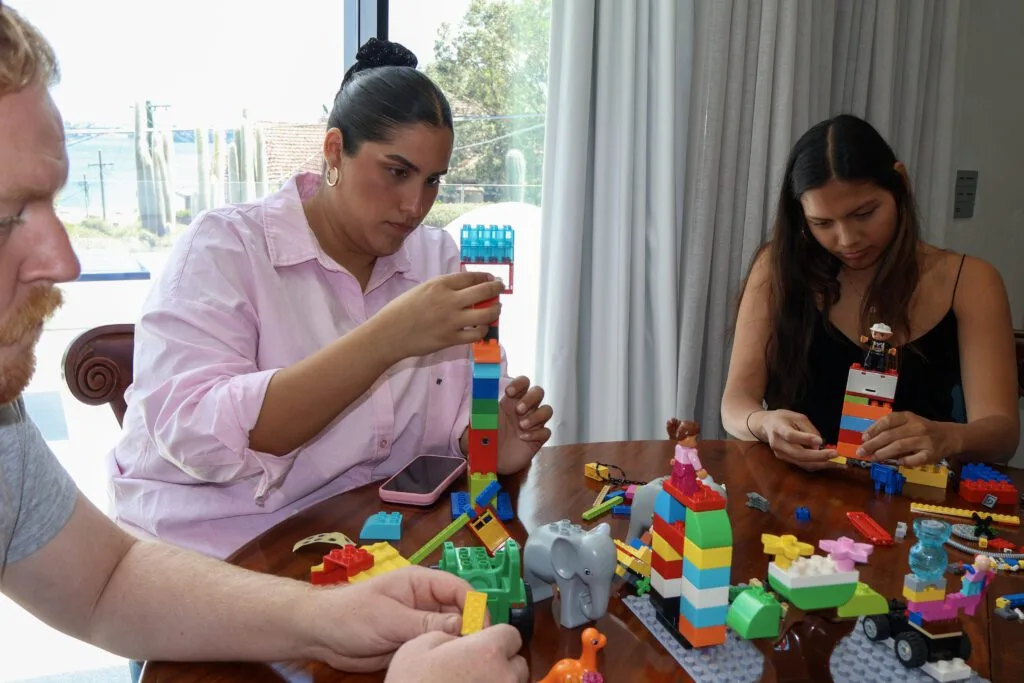
Meta-Strategy: Combining LEGO® SERIOUS PLAY® with Theory of Change
This article outlines a powerful meta-strategy that tightly integrates LEGO® SERIOUS PLAY® with Theory of Change to massively improve organizational transformation. It argues that safely moving from abstract verbal strategies to highly tangible 3D models vividly allows teams to physically build, clearly visualize, and strictly test their deep causal logic.
Read The Full Article