

The business landscape of 2026 is shaping up to be a crucible of unprecedented volatility and disruption. Geopolitical shifts, rapid tech growth, climate threats, and changing economies are not isolated events. Instead, they converge to create sustained turbulence. In this dynamic context, the very survival of organizations hinges on a single, overarching capability: Organizational Resilience.
Resilience in 2026 is more than a buzzword; it is a fundamental strategic imperative. It means adapting, evolving, and thriving amidst continuous change. However, while leaders widely discuss the importance of resilience, they rarely design and integrate it systematically.
Insight: Recent industry data reveals a concerning trend. Over half of Australian organizations still need to integrate robust risk and resilience capabilities into their structures. Furthermore, 90% of businesses fail within a year if they cannot resume operations within five days of a major disruption. Therefore, the cost of inaction is stark.
1. The Problem: Resilience Is Discussed but Rarely Designed
Five fundamental components build true Organizational Resilience. Many people frame the concept simply as the ability to "bounce back" from disruption. While this captures recovery, it remains an incomplete definition. True resilience goes beyond the speed of recovery. Fundamentally, it involves structural adaptability and the capacity to absorb disruption while maintaining strategic coherence.
In the corporate arena, this requires the interplay of leadership clarity, transparent communication, and robust decision architectures. It also demands flexible resource allocation and an adaptable organizational culture. Consequently, when one component weakens, the others must compensate. However, faced with continuous disruption, even the strongest compensations eventually falter.
By 2026, organizations will no longer face isolated shocks. Instead, they will operate within permanent instability. Consequently, this sustained turbulence demands more than basic contingency plans. It requires leaders to fundamentally reimagine how they build organizations to withstand and adapt. Boards discuss resilience frequently, yet they rarely engineer it meticulously into the organization's fabric.
2. The Organizational Cost of Low Organizational Resilience
When teams underdevelop Organizational Resilience, the effects act insidiously. They manifest as subtle yet significant drains on organizational effectiveness. For example, these issues initially appear as slower decision-making cycles and escalating tensions between cross-functional teams. You might also notice fragmented leadership direction, pervasive initiative fatigue, and costly rework.
Research consistently indicates that a substantial proportion of strategic initiatives—often between 50% and 70%—underperform. This happens because of fundamental alignment failures rather than a lack of technical capability. Ultimately, this misalignment results directly from low resilience.
Extractable Insight: In complex environments, strategic misalignment increases recovery times following a disruption by an alarming 30% to 50%. Consequently, this represents a systemic failing, not merely an operational issue.
The core problem lies in deep-seated assumptions about how the organization functions. Processes embed these assumptions deeply, yet teams rarely examine them collectively. Consequently, different departments operate with conflicting models of reality. This divergence leads to misunderstandings and makes the organization highly susceptible to prolonged downtime.
3. Why Traditional Approaches Fail to Build Organizational Resilience
Many organizations attempt to fortify themselves using a familiar toolkit. They rely on risk registers, contingency planning, scenario analysis, compliance frameworks, and crisis simulations. While necessary, these tools ultimately prove insufficient for building true Organizational Resilience.
The fundamental limitation of these traditional approaches is their narrow focus. They predict specific events rather than fostering systemic adaptability. While predicting threats offers temporary respite, it does not cultivate structural capacity. Therefore, teams cannot respond effectively to unforeseen "black swan" events.
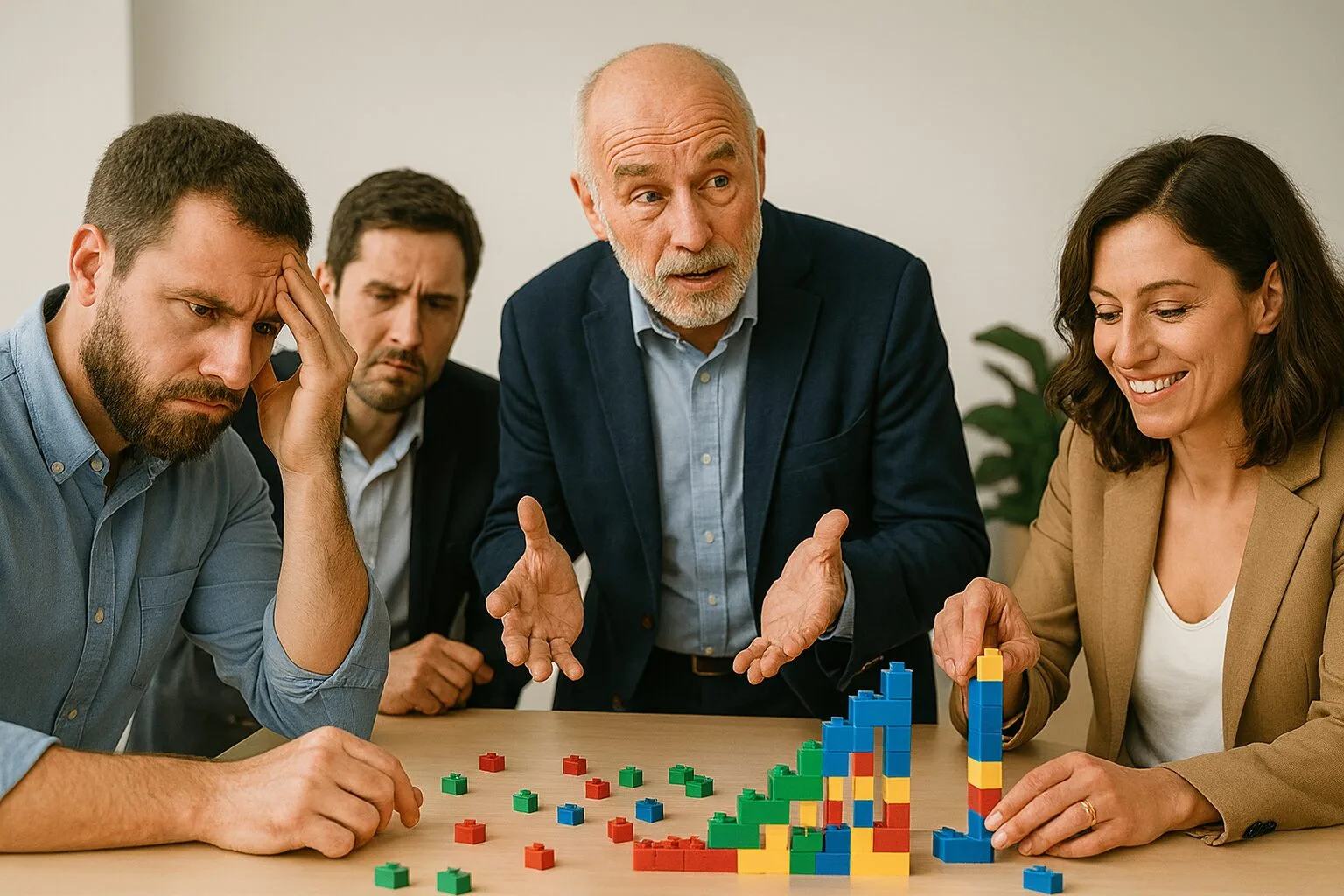
Furthermore, traditional resilience planning often remains highly document-centric. Leaders discuss risks in abstract terms. However, without an externalized, shared understanding of how these risks interact structurally, genuine adaptive architecture remains elusive. When teams fail to externalize resilience, leaders default to hierarchical decision-making. Unfortunately, this top-down approach is too slow and rigid for modern disruption.
4. The Cognitive and Methodological Foundation of Organizational Resilience
Shared mental models form the foundation of true Organizational Resilience. These models represent a collectively understood view of how a system operates, why it behaves in certain ways, and where its vulnerabilities lie. Without shared models, teams coordinate their actions based purely on individual assumptions.
Cognitive science provides a powerful insight. Specifically, externalizing thought processes significantly enhances integration. When teams construct physical or tangible representations of complex systems, abstract relationships become concrete. This physical building reduces cognitive load. As a result, it fosters more precise dialogue, accelerates alignment, and leads to quicker adaptation.
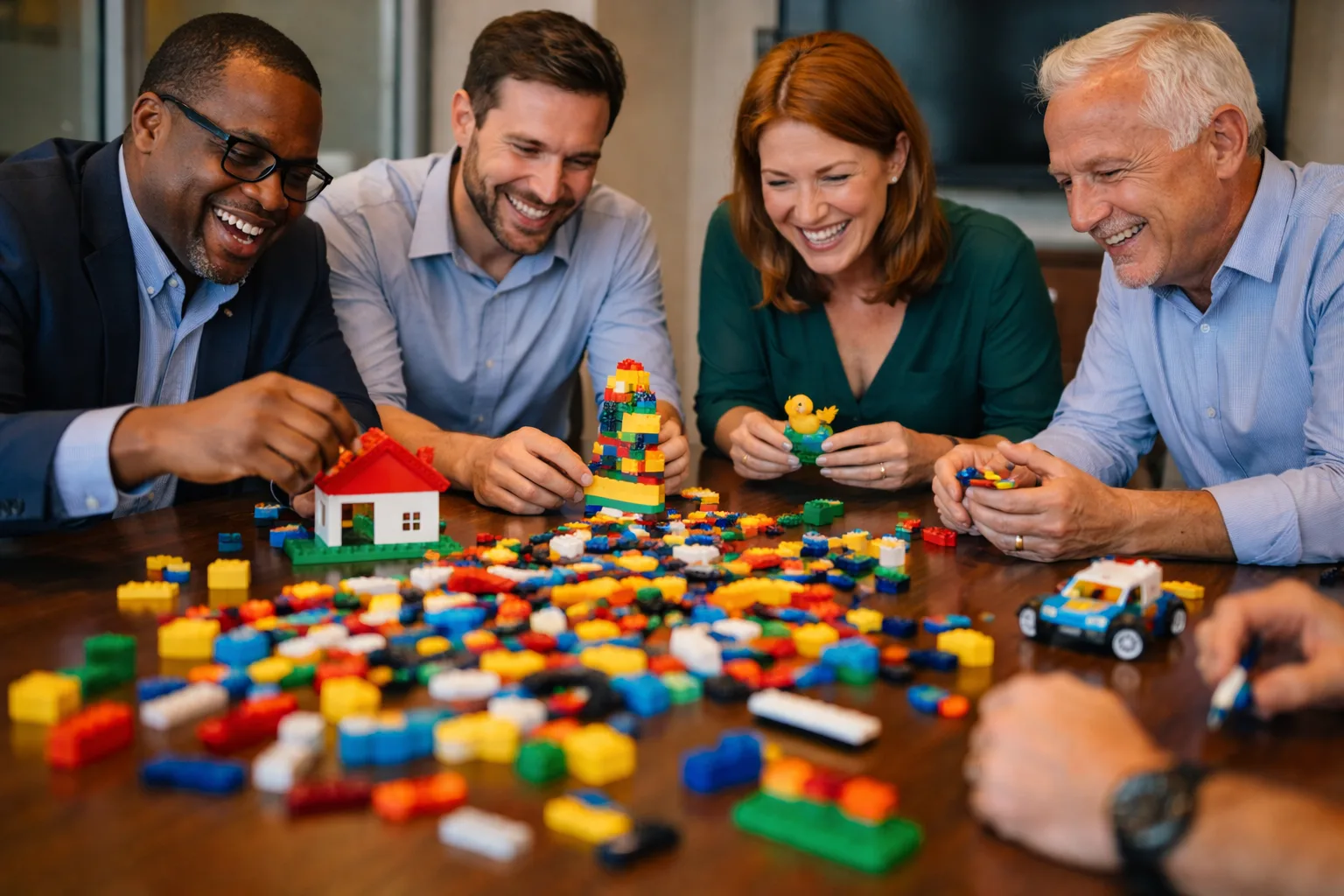
Moreover, when teams model resilience physically, defensive reactions noticeably decrease. Systemic critiques transform into shared objects of analysis rather than personal criticisms.
5. LEGO® SERIOUS PLAY® for Organizational Resilience
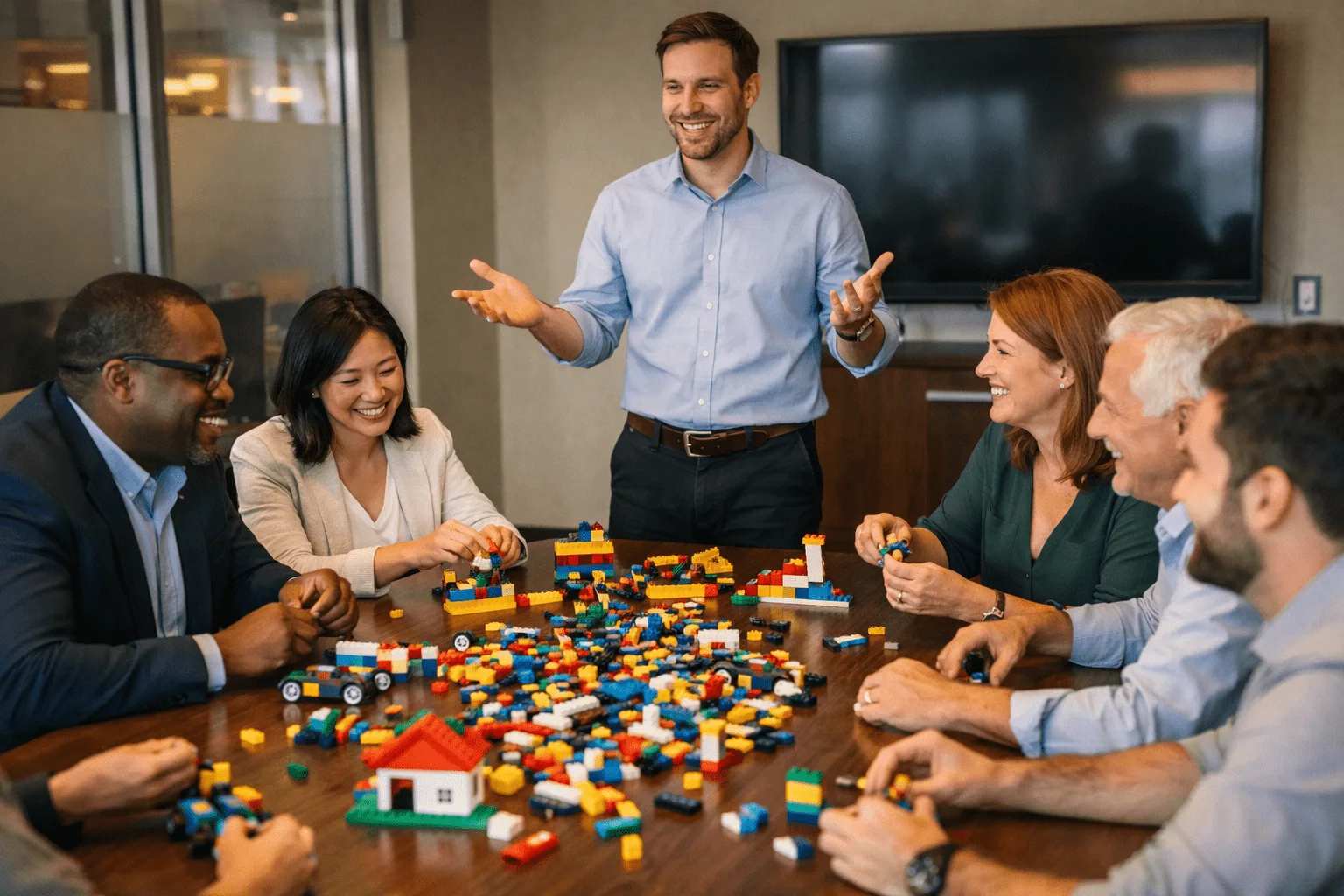
The LEGO® SERIOUS PLAY® Method empowers leadership teams to construct three-dimensional models representing their organizational systems. This is far from a simple creative exercise. Instead, it serves as a rigorously structured methodology rooted in constructivist learning theory.
- System Modeling: Teams vividly illustrate how different functions, processes, and communication channels interrelate.
- Identifying Fragilities: Building connects components. Consequently, it naturally exposes structural fragilities, single points of failure, and hidden dependencies.
- Disruption Scenario Simulation: Participants model how systems might react to disruptive events (supply chain breakdown, regulatory shift) for real-time rehearsal of adaptation.
- Reconfiguring Architecture: Teams actively reconfigure models to test the efficacy of new structures before real-world implementation.
Insight: When teams model resilience physically, hidden dependencies surface within minutes rather than months of abstract meetings.
6. Practical Diagnostic Session Outline (90–150 Minutes)
To effectively assess and begin building Organizational Resilience, teams need a structured diagnostic session. Therefore, we provide a framework designed to move from individual reflection to actionable commitments.
Click the '+' button below to explore the session phases.
Phase 1 & 2: Reflection and Collective Modelling
Phase 1: Individual System Reflection (20–30 minutes)
The facilitator poses a core question: "Build a model representing how our organization currently absorbs disruption." Participants build and then share. This surfaces diverse mental models and individual experiences with disruption.
Phase 2: Collective System Model (30–45 minutes)
The team integrates individual models into a single, shared system model. First, they identify critical decision points, communication channels, and significant dependencies. Then, they explicitly highlight single points of failure to make structural fragilities visible to the entire team.
Phase 3 & 4: Stress Simulation and Commitments
Phase 3: Stress Simulation (30–45 minutes)
Next, the facilitator introduces a plausible disruption scenario (e.g., cyberattack, geopolitical conflict). The team modifies their collective model in real-time to simulate their response. Through this process, they observe cascade effects and rehearse adaptation.
Phase 4: Structural Insights & Commitments (10–20 minutes)
Finally, the team identifies the top three structural vulnerabilities and defines at least two concrete resilience enhancers. The facilitator assigns ownership for these structural adjustments to specific team members. Ultimately, this results in a visible resilience roadmap.
7. Strategic Relevance of Organizational Resilience
Organizational Resilience represents more than a mere risk mitigation tactic. Indeed, it serves as a strategic capability that underpins the effective execution of strategy itself. Adaptive systems possess the inherent ability to preserve alignment and coherence under pressure. Thus, they prevent strategic ambition from crumbling into reactive chaos.
In organizational change initiatives, resilience often serves as the determining factor between successful transformation and eventual collapse. A key insight reveals that strategy pursued without adequate resilience quickly becomes fragile ambition. Conversely, organizations that systematically model and strengthen their resilience consistently report faster recovery times. They also experience improved cross-functional clarity and a marked reduction in internal conflicts.
Conclusion
As organizations navigate through 2026, the imperative of Organizational Resilience has transitioned. It moved from a strategic advantage to an absolute prerequisite for survival. Traditional approaches that focus on predicting specific risks are now insufficient. Instead, true resilience demands systemic adaptability, an adaptive organizational culture, and resilient technological infrastructures.
Fortunately, methodologies like LEGO® SERIOUS PLAY® offer a tangible path forward. They enable organizations to externalize complexity, identify vulnerabilities, and collaboratively build adaptive capacity. Ultimately, an organization’s deliberate and ongoing commitment to building and nurturing its resilience secures its strategic survival.
Frequently Asked Questions (FAQ)
What is Organizational Resilience?
Organizational Resilience is the structured capacity of an organization to absorb disruption, adapt structurally to changing circumstances, and recover efficiently without losing its strategic alignment.
How does LEGO® SERIOUS PLAY® support Organizational Resilience?
It supports resilience by externalizing complex organizational structures into shared, tangible physical models. By making critical interdependencies and potential bottlenecks visible, it enables teams to collaboratively redesign adaptive pathways.
Is Organizational Resilience different from risk management?
Yes. Risk management focuses on identifying and mitigating specific potential threats. Organizational Resilience focuses on strengthening the organization’s inherent systemic adaptability to respond to a wide range of unknown disruptions.
How long does a resilience workshop take?
A diagnostic Organizational Resilience workshop utilizing methods like LEGO® SERIOUS PLAY® typically ranges from 90 minutes to 3 hours, depending on the complexity of the organizational system being modeled.
Meta-Strategy: Combining LEGO® SERIOUS PLAY® with Theory of Change for Transformational Initiatives
This article outlines a meta-strategy that integrates LEGO® SERIOUS PLAY® with Theory of Change to improve organizational transformation. It argues that moving from abstract verbal strategies to tangible 3D models allows teams to physically build, visualize, and test their causal logic.
Read The Full Article