

To encourage team innovation when it feels like your team has no new ideas, the solution is to evolve your company culture by integrating quick creativity exercises into your daily routine. Rather than treating creativity as a separate event, this approach builds a sustainable innovation process. It ensures the pressure to deliver doesn't extinguish the spark of ingenuity needed for a true competitive advantage.
The Delivery Trap: When "Getting it Done" Kills Good Ideas
Every leader knows the feeling. The team is executing flawlessly, and short-term Key Performance Indicators (KPIs) are being met. But beneath the hum of productivity, a creative silence has fallen. The team is so focused on delivery that they've stopped asking "what if?" This is the delivery trap—a state where routine smothers the creativity needed to solve long-term business challenges.
Team meetings become status updates, not true brainstorming sessions. New ideas are seen as risky distractions that might get tangled in red tape. Before you know it, your team is stuck in a rut, and your business strategy becomes reactive instead of pioneering.
Why Teams Stop Being Creative
This creative stagnation isn't a sign of a bad team; it's a symptom of a system that has unintentionally prioritized efficiency over ingenuity.
- Cognitive Overload & Brain Fog: When a team member is running at 110% capacity, there is no mental bandwidth left for divergent thinking, leading to brain fog and burnout. A poor work-life balance is a direct enemy of innovation.
- Fear of Failure: In a high-pressure environment, the perceived cost of a failed experiment feels enormous. Without strong psychological safety, team members will stick to proven, safe solutions.
- A Toxic Culture: True idea sharing is impossible if even one toxic person dominates conversations or belittles suggestions. A culture of fear shuts down the vulnerability required for creativity.

Weaving Innovation into the Fabric of Your Workday
Injecting creativity is about building small, consistent habits that create space for organizational breakthroughs.
- Sanction Time for Innovation: This concept, pioneered by companies like 3M and Google, formally gives employees permission to work on projects outside their core tasks. It signals that the organization trusts its engaged employees and invests in their curiosity.
- Start Meetings with a Creative Warm-up: Spend the first five minutes on a quick exercise. This builds crucial soft skills and primes the brain for innovative problem-solving.
- Replace the Suggestion Box: Create a dynamic channel for knowledge sharing using Tools & software like Microsoft Teams where ideas can be discussed, built upon, and celebrated collaboratively.
- Celebrate "Intelligent Failures": As Clayton Christensen of Harvard Business School taught, disruptive innovation rarely comes without missteps. When an experiment doesn't work, use employee recognition to praise the effort and the insights gained.
Quick Creativity Exercises for Your Next Team Meeting
Use one of these 5-minute exercises to leverage the cognitive diversity of your team:
- Alternative Uses: First described by creativity researcher Robert McKim, this exercise (e.g., "list 30 uses for a paperclip") breaks down fixed thinking patterns.
- Constraint Challenge: Present a problem with an absurd constraint: "How would we improve Customer Service if we couldn't use phones?" Constraints are a powerful catalyst for out-of-the-box thinking.
- Six-Word Story: Challenge the team to describe a customer's problem in six words. This fosters Customer centricity by forcing concise, empathetic thinking.
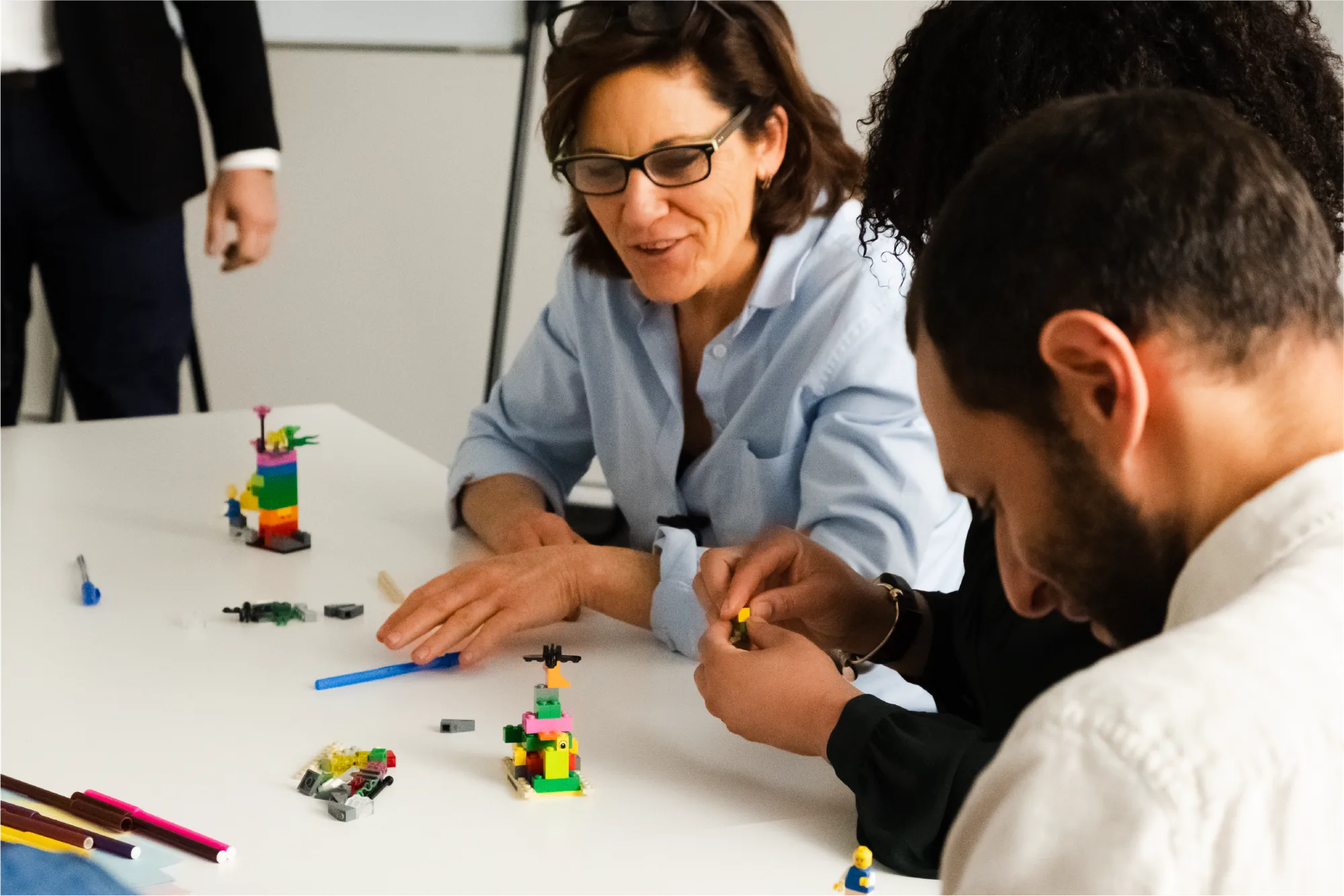
Building a Sustainable Innovation Culture
Ultimately, these exercises are tools to support a larger culture shift. A truly innovative environment, as studied by researchers like Göran Ekvall, thrives on trust and empowerment. It requires servant leadership, where managers act as facilitators, not gatekeepers. It means designing an employee experience that encourages curiosity, from the flexibility of a hybrid work/life balance to an Office design, like Google's office design, that encourages spontaneous interaction.
Frequently Asked Questions (FAQ)
Q: Our company culture is very traditional. How do we start?
A: Start small and demonstrate value. Introduce a single, quick creative warm-up in your own team meeting. When it helps generate a good idea for a real business challenge, share that success story. Gaining buy-in is a process of continuous improvement.
Q: How is this different from just having more whiteboarding sessions?
A: Whiteboarding sessions are a tool, but they are often unstructured and dominated by the loudest voices. The methods described here focus on building the underlying psychological safety and creative habits that make all collaborative efforts, including whiteboarding, more productive and inclusive.
Q: How do you measure the ROI of investing in creativity?
A: Look at both lead and lag indicators. Track the number of new ideas generated and implemented (lead). Over time, this should impact metrics like employee productivity, staff retention, market share, and even sales figures (lag).