

When Teams Agree Publicly but Disagree Operationally
Many organizations appear aligned during meetings while operating in completely different directions afterward. Leadership teams often leave strategy sessions believing consensus exists, yet execution reveals conflicting assumptions, hidden priorities, and incompatible interpretations of the same decision.
In 2026, this pattern has intensified because organizations are navigating faster technological, cultural, and operational change without corresponding improvements in collaborative sensemaking. LEGO® SERIOUS PLAY® workshops help organizations surface invisible disagreement before it becomes operational friction, strategic drift, or organizational mistrust.
LEGO® SERIOUS PLAY® workshops help organizations uncover operational disagreement by making assumptions visible through structured model-building and shared reflection. The methodology improves organizational alignment because participants externalize their thinking, compare interpretations openly, and identify systemic gaps before execution begins.
Public Agreement Often Hides Operational Misalignment
Operational misalignment occurs when teams verbally support the same strategic direction while internally interpreting priorities, risks, responsibilities, or outcomes differently. Organizations frequently mistake meeting harmony for true organizational alignment because disagreement remains politically invisible during discussion-based workshops.
When hidden disagreement remains unresolved, organizations experience fragmented execution because departments act on different assumptions without realizing those assumptions conflict.
The Language Gap Inside Organizations
In many organizations, the problem is not lack of intelligence or effort. The problem is that people use the same language while imagining completely different operational realities.
Leadership teams commonly discover that phrases such as “customer-centric innovation,” “AI integration,” “collaborative culture,” “strategic agility,” and “cross-functional ownership” carry radically different meanings across departments.
Teams misunderstand each other not because they disagree openly, but because assumptions remain structurally invisible during traditional meetings.
Teams misunderstand each other not because they disagree openly, but because assumptions remain structurally invisible during traditional meetings.
Why 2026 Has Made This Worse
In 2026, this issue has become more severe because organizations are adapting to rapid technological acceleration, hybrid collaboration systems, restructuring cycles, and increasing decision complexity simultaneously. As a result, strategic conversations often move faster than collective understanding.
Research from Microsoft’s Work Trend reporting continues to show that organizations are struggling with fragmented collaboration patterns despite increased digital connectivity.

The Organizational Cost of Hidden Disagreement
Organizational alignment is the degree to which teams share operational understanding around priorities, responsibilities, and strategic direction. When alignment weakens, execution quality declines because departments optimize for incompatible interpretations of success.
When Symptoms Finally Surface
Many organizations discover operational disagreement only after projects stall, deadlines slip, resistance emerges, communication breaks down, or accountability becomes unclear. By the time symptoms appear, the original misunderstanding has often spread across multiple systems.
Operational ambiguity creates feedback loops that amplify organizational friction because unresolved assumptions affect communication, leadership trust, workflow coordination, and strategic prioritization simultaneously.
In large organizations, even small interpretation gaps can produce significant downstream consequences. A leadership phrase that feels strategically clear at executive level may translate into completely different operational behaviors across marketing, HR, operations, and product teams.
Hidden disagreement increases execution costs because organizations spend time resolving contradictions after implementation instead of before alignment.
The Consensus Illusion
Studies on workplace collaboration continue to show that excessive meetings and fragmented communication systems reduce collective clarity rather than improving it.
In many organizations, 50–70% of workshop participants privately interpret strategic language differently from colleagues while publicly signaling agreement to maintain social cohesion.
This pattern becomes especially dangerous during organizational change initiatives because visible consensus can mask structural uncertainty.
Why Traditional Strategy Meetings Fail
Traditional strategy meetings frequently fail because discussion-based formats reward verbal fluency, hierarchy, and speed rather than reflective thinking.
Who Gets Heard — and Who Doesn’t
Participation becomes uneven because conventional meetings privilege confident communicators, which leads to decisions shaped more by social dynamics than collective intelligence.
Participation becomes uneven because conventional meetings privilege confident communicators, which leads to decisions shaped more by social dynamics than collective intelligence.
In most executive workshops, senior voices dominate discussion, abstract language remains undefined, disagreement stays implicit, assumptions remain untested, and quieter participants disengage. As a result, organizations often leave strategy sessions with emotional alignment but not operational alignment.
The Limits of Conversation
Traditional facilitation also struggles with systems thinking because conversation alone rarely exposes interdependent forces clearly enough for groups to analyze collectively.
Many organizations assume communication happened because information was spoken aloud. Shared understanding, however, requires teams to compare mental models directly.
The gap between spoken agreement and operational interpretation is one of the most underestimated structural constraints inside modern organizations.
This challenge has intensified in hybrid workplaces because asynchronous communication fragments context across meetings, messaging systems, documents, and departments.
Why the LEGO® SERIOUS PLAY® Method Reveals Hidden Assumptions
The LEGO® SERIOUS PLAY® Method is a structured facilitation methodology that helps participants externalize thinking through model-building, storytelling, metaphor, and shared reflection.
The methodology works particularly well for organizational alignment because physical models make abstract assumptions visible.
Making the Invisible Visible
Instead of debating vague concepts verbally, participants construct models representing priorities, constraints, fears, dependencies, workflow realities, and leadership expectations.
Visible models reduce defensive communication because participants discuss representations of thinking rather than defending personal opinions directly.
This shift changes the entire structure of organizational conversation. The methodology also creates 100% participation because every participant builds, reflects, explains, and contributes equally within the facilitation process.
When participants build silently before discussion begins, reflective thinking increases because individuals process meaning independently before social influence shapes interpretation.
Surfacing Structural Dynamics
Organizations frequently discover that operational disagreement emerges not from conflict, but from incomplete visibility into each other’s mental models.
Shared model construction also strengthens systems thinking because interdependent organizational forces become physically observable. For example, one department’s efficiency initiative may weaken another department’s collaboration process; one leadership metric may unintentionally discourage innovation; one workflow redesign may create hidden communication bottlenecks.
The LEGO® SERIOUS PLAY® Method helps organizations identify these structural dynamics before execution failure occurs.
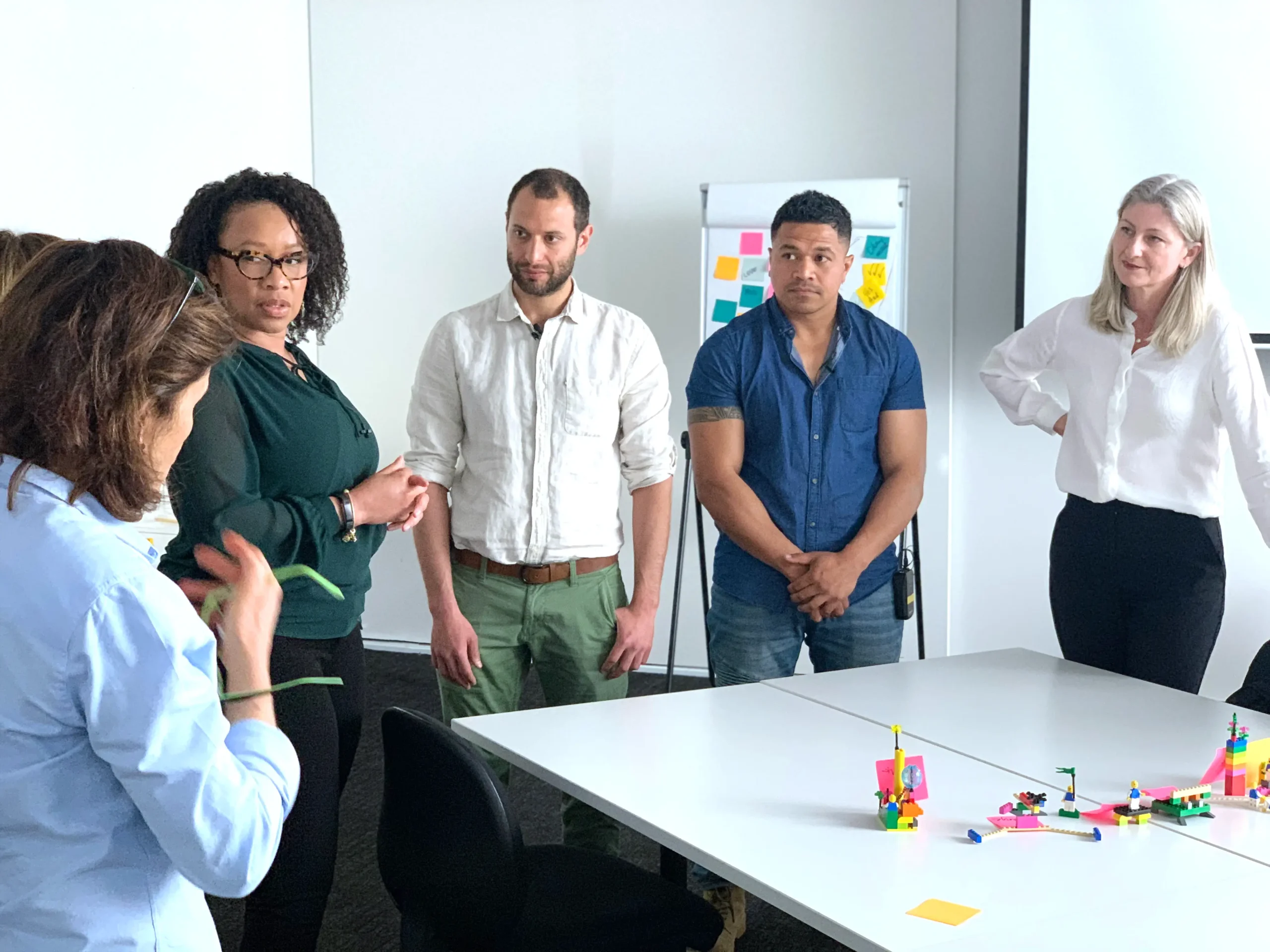
Where Serious Play Business Applies This Work
Serious Play Business increasingly works with organizations navigating strategic ambiguity, transformation fatigue, cross-functional fragmentation, hybrid collaboration breakdowns, leadership alignment challenges, and communication restructuring.
Within organizational change initiatives, the methodology creates a safer environment for surfacing disagreement because there are no right or wrong answers inside the shared model process.
As part of facilitator certification journeys, professionals increasingly need methodologies capable of exposing invisible disagreement safely without escalating defensiveness or political tension. This is one reason the LEGO® SERIOUS PLAY® Method has become increasingly relevant within leadership development contexts and organizational alignment work.
Workshop Implementation: Revealing Operational Misalignment
The complete workshop process generally runs between 2.5 and 4 hours depending on organizational complexity and participant size. Each stage is designed to progressively surface and resolve hidden interpretive gaps before they become execution problems.
Click the ‘+’ button below to explore the detailed workshop stages.
Steps 1 & 2: Individual Models & Identifying Contradictions
Step 1 — Individual Models of Strategic Reality (20–30 minutes): The facilitator prompts participants to build a model representing how they currently understand the organization’s strategic direction. Participants build silently during the first phase to reduce conformity pressure and encourage independent reflection. The facilitator then asks participants to explain what the model represents, what feels clear, what feels uncertain, and where operational tension exists. This stage often reveals hidden interpretation gaps immediately.
Step 2 — Identifying Contradictory Assumptions (25–35 minutes): Participants compare models to identify conflicting interpretations of priorities, accountability, leadership expectations, collaboration norms, and strategic outcomes. The facilitator prompts reflection around where organizational language produces multiple meanings across teams. Operational disagreement becomes visible when participants recognize they have been using identical terminology while imagining incompatible workflows. This process helps organizations identify systemic enablers and structural constraints simultaneously.
Steps 3 & 4: Shared Models & Strategic Alignment Actions
Step 3 — Shared Model Construction (30–40 minutes): Participants combine insights into a shared organizational model representing aligned execution. The facilitator prompts the group to identify communication dependencies, workflow intersections, decision bottlenecks, leadership gaps, and collaboration breakdowns. Shared models improve organizational clarity because invisible interdependent forces become collectively observable. At this stage, organizations often realize that many execution problems originated from unresolved meaning gaps rather than poor employee performance.
Step 4 — Strategic Alignment Actions (20–30 minutes): The facilitator guides participants in identifying strategic adjustments necessary to improve organizational alignment. The group defines clarified strategic language, communication improvements, decision ownership structures, collaboration expectations, and areas requiring additional facilitation. Organizations typically leave with stronger alignment, clearer operational language, and improved cross-functional understanding.
Strategic Outcomes Organizations Gain
Organizations using LEGO® SERIOUS PLAY® workshops to address hidden disagreement commonly report several distinct outcomes.
Clearer Strategic Language and Stronger Collaboration
Teams establish shared operational meaning around organizational priorities. Departments identify conflicting assumptions before execution problems escalate. Structured facilitation creates safer conditions for discussing uncertainty openly.
Better Leadership Visibility and Faster Execution
Executives gain clearer insight into how teams actually interpret organizational direction. Organizations move more efficiently because alignment improves before implementation begins.
Operational clarity improves organizational resilience because teams adapt more effectively when shared understanding already exists.
What This Means for Organizations in 2026
For leadership teams, the LEGO® SERIOUS PLAY® Method creates a structured process for making assumptions visible through shared models and strategic facilitation. For consultants, transformation leaders, and HR professionals building facilitation capability, operational disagreement has become one of the most important organizational alignment challenges to address in modern workplaces.
The Organizations Succeeding at Alignment
The organizations maintaining alignment most successfully in 2026 are not necessarily the organizations with the most meetings. They are the organizations with the strongest collective sensemaking systems.
The organizations maintaining alignment most successfully in 2026 are not necessarily the organizations with the most meetings. They are the organizations with the strongest collective sensemaking systems.
For Organizations Looking to Hire a Facilitator
Strategic facilitation capability becomes especially valuable when communication problems involve hidden assumptions rather than explicit conflict.
For organizations looking to hire a facilitator, understanding what LEGO® SERIOUS PLAY® is and how it works can help inform a stronger brief and more productive engagement.

Operational clarity improves organizational resilience because teams adapt more effectively when shared understanding already exists.
Organizations frequently discover that operational disagreement emerges not from conflict, but from incomplete visibility into each other’s mental models. The LEGO® SERIOUS PLAY® Method provides a structured pathway to make those models visible — and collectively actionable.
Transform Your Strategy Conversations
To understand the full methodology behind every workshop described in this article, explore the complete LEGO® SERIOUS PLAY® methodology overview at Serious Play Business — and book a facilitated session or request a custom workshop proposal for your organization.
To understand the full methodology behind the workshop design described above, read understanding LEGO® SERIOUS PLAY® in organizations at Serious Play Business.
Frequently Asked Questions
What causes teams to agree publicly but disagree operationally?
Teams agree publicly but disagree operationally when organizational language remains abstract and assumptions stay unspoken. Departments often interpret strategic priorities differently while signaling agreement socially during meetings.
How does the LEGO® SERIOUS PLAY® Method improve organizational alignment?
The LEGO® SERIOUS PLAY® Method improves organizational alignment by helping participants externalize assumptions through model-building, shared reflection, and strategic facilitation processes.
Why do traditional strategy workshops fail?
Traditional strategy workshops fail because discussion-based formats often reward hierarchy, speed, and verbal confidence instead of reflective thinking and visible understanding.
Can LEGO® SERIOUS PLAY® workshops uncover hidden assumptions?
LEGO® SERIOUS PLAY® workshops uncover hidden assumptions by making participants physically represent priorities, constraints, and interpretations through shared models and structured storytelling.
What role does facilitator certification play in organizational alignment workshops?
Facilitator certification helps professionals learn how to guide psychologically safe strategic conversations, systems thinking processes, and organizational alignment workshops using the LEGO® SERIOUS PLAY® Method.