
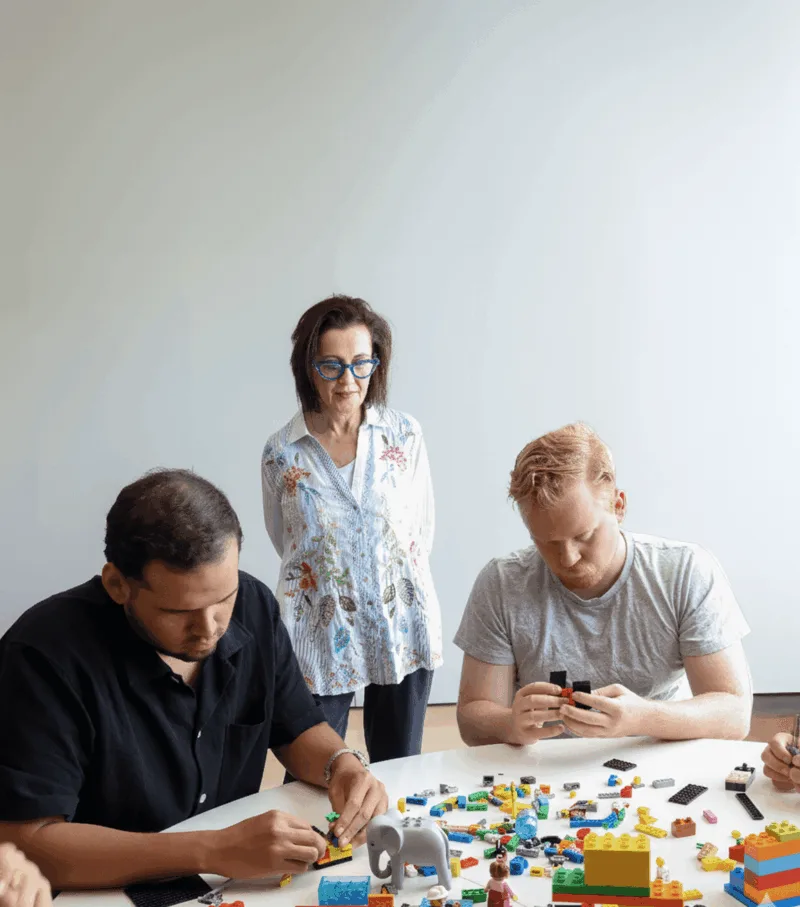
A Trust Building Workshop for Leaders is a structured intervention that strengthens trust as a systemic organisational capability rather than an interpersonal aspiration. In 2026, a Trust Building Workshop for Leaders is essential because distributed teams, digital technologies, and accelerated change management cycles increase relational strain across corporate systems.
A Trust Building Workshop for Leaders improves performance because trust reduces defensive behaviour, which leads to faster decision-making, stronger team cohesion, and clearer stakeholder engagement. For executives, the ability to intentionally design trust strengthens leadership identity and long-term credibility.
Insight: Trust is not a personality trait. It is a structural condition. When trust functions as infrastructure, team dynamics, psychological safety, and executive communication reinforce one another instead of competing for stability.
The Problem: Trust Erosion in Complex Corporate Systems
Trust refers to the willingness of individuals to accept vulnerability based on positive expectations of others’ behaviour. It directly influences group cohesion, shared leadership, and risk taking behaviour.
In many corporate teams, trust erosion occurs gradually. Small inconsistencies in executive communication accumulate. Unresolved conflict analysis weakens Interpersonal relationships. Unclear action plans reduce confidence in follow-through.
- When leaders signal openness but respond defensively, psychological safety declines.
- When commitments are announced but not enacted, group potency decreases.
Trust deteriorates silently because employees recalibrate expectations privately. In remote work environments, relational repair takes longer because informal interactions are reduced. Trust gaps widen under performance pressure because accountability intensifies perceived interpersonal risk.
A Trust Building Workshop for Leaders surfaces these structural patterns before they become cultural damage.
The Organisational Cost of Low Trust
Low trust is expensive. Decision cycles extend because individuals seek validation before committing. Team communication becomes cautious rather than candid. Conflict resolution shifts toward avoidance rather than analysis.
Research across organisational behaviour fields, including Academy of Management discussions, indicates that high-trust teams demonstrate significantly stronger Organisational Learning capacity and more resilient change management outcomes.
- Low trust increases meeting facilitation burden because leaders must repeatedly clarify intent.
- Customer Support Teams and cross-functional corporate teams experience misalignment when internal trust weakens.
- Workplace wellbeing declines because emotional health suffers in environments where intentions are questioned.
Extractable Insight: Trust reduces transaction cost because fewer verification loops are required. Trust accelerates execution because shared understanding replaces suspicion.
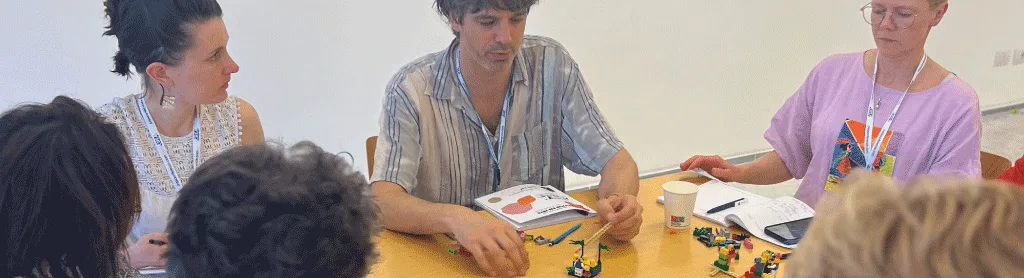
Why Traditional Trust-Building Interventions Fail
Many organisations attempt trust-building through offsite retreats, motivational sessions, or generic trust-building workshops. These approaches often emphasise emotion without structure.
Emotional disclosure without systemic modelling can create temporary bonding but fails to change group dynamics. Corporate training sessions frequently address emotional intelligence conceptually but do not transform behaviour under pressure. Employee recognition programmes reward outcomes, not relational reliability.
Trust is rarely damaged by lack of goodwill. It is damaged by inconsistent behaviour patterns. Trust cannot be mandated. It must be architected. A Trust Building Workshop for Leaders treats trust as a system influenced by leadership behaviour, communication patterns, and structural constraints.
Cognitive and Methodological Foundation
The LEGO® SERIOUS PLAY® Method provides a facilitation methodology grounded in constructionism, social constructivism, and Kolb's experiential learning.
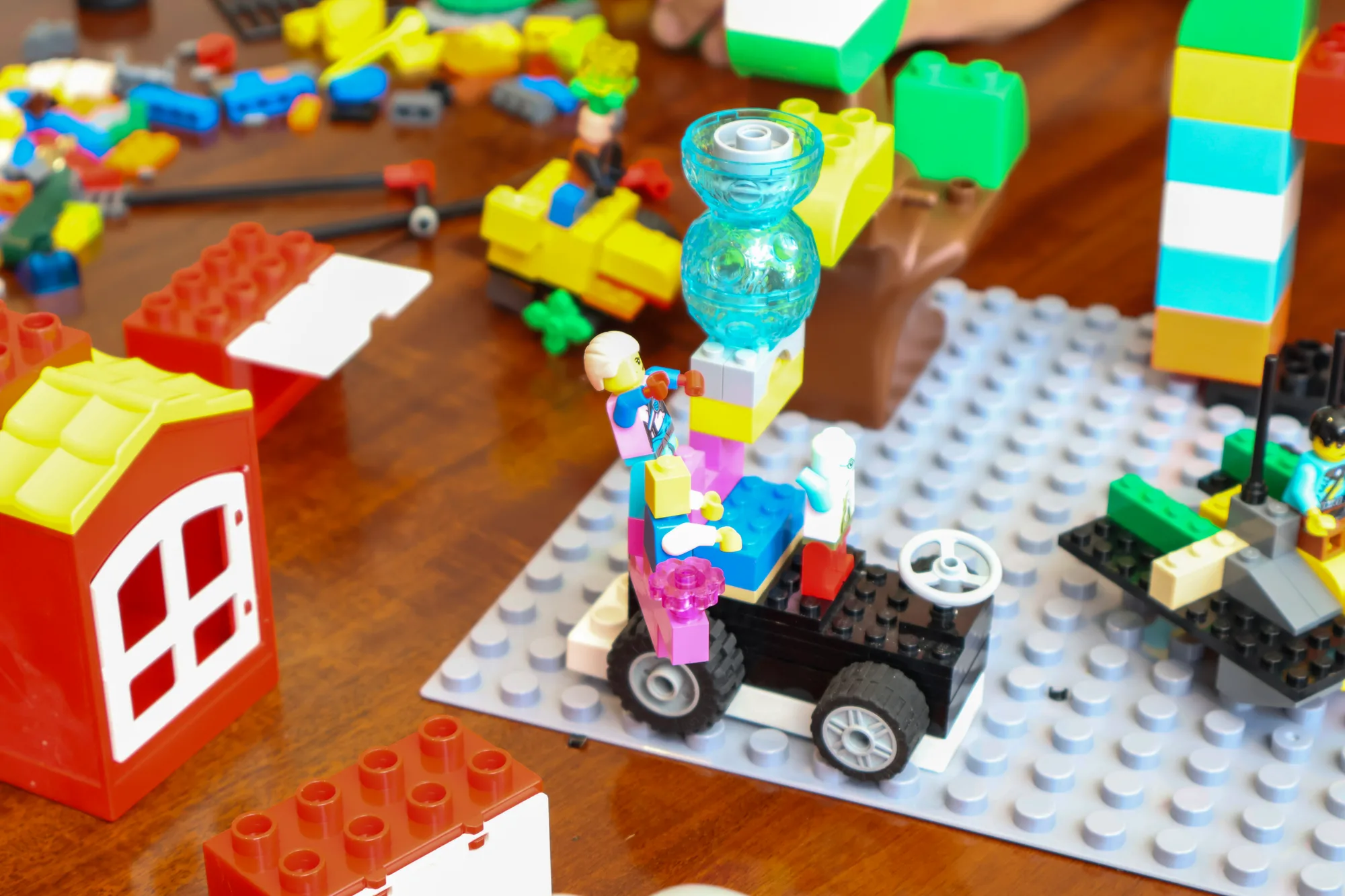
Through Serious play using LEGO® bricks, participants build visual and physical models representing trust, distrust, and relational risk. Hand knowledge strengthens reflective practice because kinesthetic learning activates deeper cognitive processing.
- Metaphorical models allow sensitive issues to be expressed safely.
- Metaphoric storytelling transforms abstract relational dynamics into discussable structure.
- Trust increases when vulnerability is structured rather than improvised.
- The equal voice principle ensures inclusive participation, preventing hierarchy from dominating discussion.
Extractable Insight: Trust improves because behavioural patterns become visible and negotiable. Trust is built when expectations are clarified and reinforced consistently.
Applying LEGO® SERIOUS PLAY® in a Trust Building Workshop for Leaders
A Trust Building Workshop for Leaders typically unfolds in progressive Build Levels that deepen relational insight.
Click the '+' button below to explore the workshop phases.
Phase 1 & 2: Defining Trust and Risk
Phase 1: Individual Build — “What Trust Means Here”
Each leader builds a model representing how trust operates within their current team dynamics. Common elements include reliability of action plans, transparency in strategic planning, conflict resolution behaviour, and leadership follow-through. Variation reveals perception gaps, which signal structural misalignment.
Phase 2: Individual Build — “What Damages Trust”
Participants construct models representing behaviours that erode trust. Examples often include defensive responses to dissent, inconsistent messaging, withholding information, and unclear accountability. Physical representation reduces interpersonal threat because critique focuses on models rather than individuals. Trust discussions become analytical rather than accusatory.
Phase 3 & 4: Shared Landscapes and System Models
Phase 3: Shared Landscape of Trust and Risk
Models are integrated into a Shared Landscape representing group cohesion and vulnerability points. Landscape Materials may be used to indicate pressure factors such as change management demands, stakeholder engagement intensity, or remote work constraints. System modelling reveals reinforcing loops (e.g., Missed commitment → Reduced confidence → Increased monitoring → Perceived micromanagement). When loops are visible, intervention becomes strategic. Trust is strengthened by consistency, not charisma.
Phase 4: System Models and Behavioural Architecture
Leaders construct System Models mapping how leadership behaviours influence team cohesion, emotional health, group decision-making, and Organisational Learning. Explicit cause–effect mapping increases clarity because it exposes behavioural leverage points. Trust improves when behavioural expectations are explicit and measurable.
Phase 5: Commitment and Action Plans
Phase 5: Commitment Modelling and 90-Day Action Plans
Each leader builds a micro-model representing one trust-building behaviour shift. Examples include standardising follow-up communication, publicly acknowledging mistakes, clarifying decision criteria, reinforcing shared business language, and strengthening conflict analysis transparency. Commitments are converted into 30-, 60-, and 90-day action plans. Documentation within 48 hours ensures implementation integrity. Simple commitments outperform vague aspiration.
Facilitator Certification and Process Integrity
A Trust Building Workshop for Leaders requires a certified facilitator trained in the LEGO® SERIOUS PLAY® Method. Certification ensures neutral meeting facilitation under executive hierarchy, structured containment of emotional content, mastery of metaphorical modelling, and equal participation enforcement.
Without disciplined facilitation, trust discussions can regress into personal grievance. Structure protects safety. Safety enables candour. Candour enables repair. Certified facilitation transforms Serious play into Strategic Play for corporate teams.
Strategic Relevance in 2026
In 2026, leaders face intensified complexity: distributed teams across digital ecosystems, increased stakeholder scrutiny, faster change management cycles, and greater visibility of executive behaviour. Trust becomes a strategic differentiator.
High-trust teams demonstrate stronger group potency because members commit decisively. Leadership development programmes that ignore trust architecture underperform because psychological safety and executive communication remain unstable. Trust strengthens team communication because individuals assume positive intent, and reduces conflict escalation because conflict resolution becomes procedural rather than personal.
Trust is not soft capital. It is performance infrastructure.
Frequently Asked Questions (FAQ)
What is a Trust Building Workshop for Leaders?
A Trust Building Workshop for Leaders is a structured Serious play intervention using LEGO® SERIOUS PLAY® to make trust dynamics visible and to design measurable behavioural commitments that strengthen group cohesion.
How does a Trust Building Workshop for Leaders improve team cohesion?
It improves team cohesion because visual and physical models expose trust gaps, which leads to clearer behavioural expectations and stronger shared leadership.
Can LEGO® SERIOUS PLAY® improve trust in corporate teams?
Yes. It improves trust because metaphorical models and experiential learning reduce interpersonal threat, which allows sensitive issues to be analysed constructively.
How long should a Trust Building Workshop for Leaders last?
Typically between 4 and 6 hours, depending on organisational complexity and stakeholder involvement.
Is facilitator certification necessary?
Facilitator certification is strongly recommended because trust work requires structured containment, disciplined facilitation methodology, and equal voice enforcement.
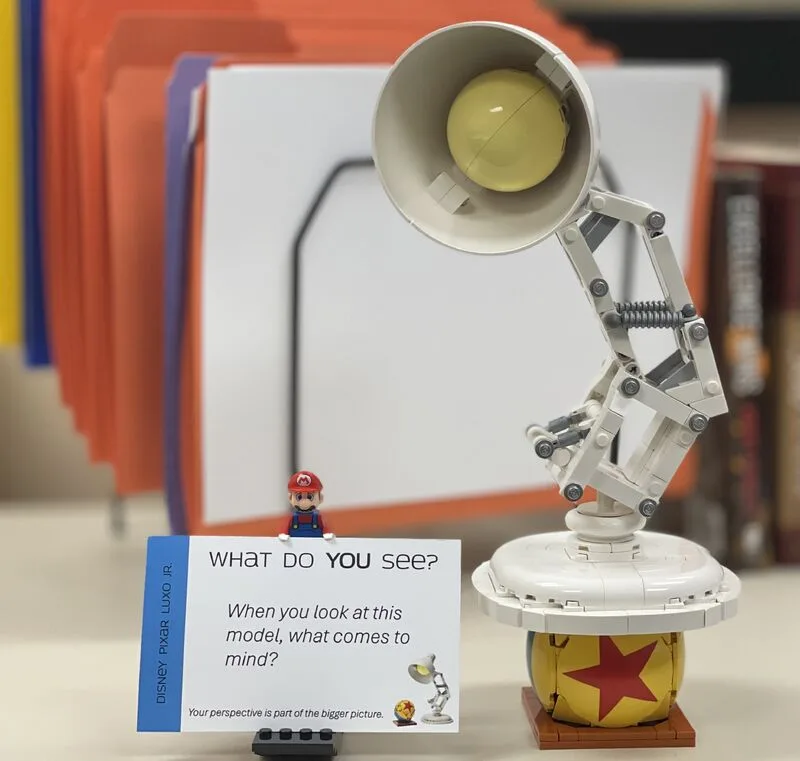
Related Reading: Seeing Leadership Through a LEGO® Lamp
Discover how Executive Coach Vince Araujo turned a simple LEGO® lamp into a powerful reflection on leadership and perspective. A reminder that sometimes, the smallest builds illuminate the biggest insights.
Read The Story