
Innovation Workshop with LEGO® Serious Play®: How Teams Build Better Ideas Together
Innovation sessions often start with a blank whiteboard and a request for ideas. The people who are quickest to speak set the direction, and everyone else adjusts to it. LEGO® Serious Play® changes the starting point. Each participant builds a model in response to a real innovation question, then explains it in their own words, so the ideas on the table come from the whole group.
This guide explains what an innovation workshop built on this method looks like, compares it with a traditional brainstorm, walks through a five-stage flow, and covers what to look for in a facilitator before you commit.
LEGO® Serious Play® supports innovation work by giving every participant the same chance to build, explain, and be heard. Instead of competing to pitch the first idea aloud, people make their own thinking visible in a model, discuss it with colleagues, and leave with a shared view they can act on.
- Everyone builds and everyone explains, so ideas come from the whole group and not only from the fastest talkers.
- Models make half-formed thinking concrete, which gives colleagues something specific to question and build on.
- Skilled facilitation matters: the method requires practice and deep domain expertise, and the session has to be adapted to the group in the room.
What Is a LEGO® Serious Play® Innovation Workshop?
An innovation workshop is a structured session in which a group works out where new ideas might come from, what is getting in their way, or which opportunity deserves attention first. In this format the group does that work by building. Participants are given a question that matters to their work and asked to answer it with a model.
How an Innovation Session Works
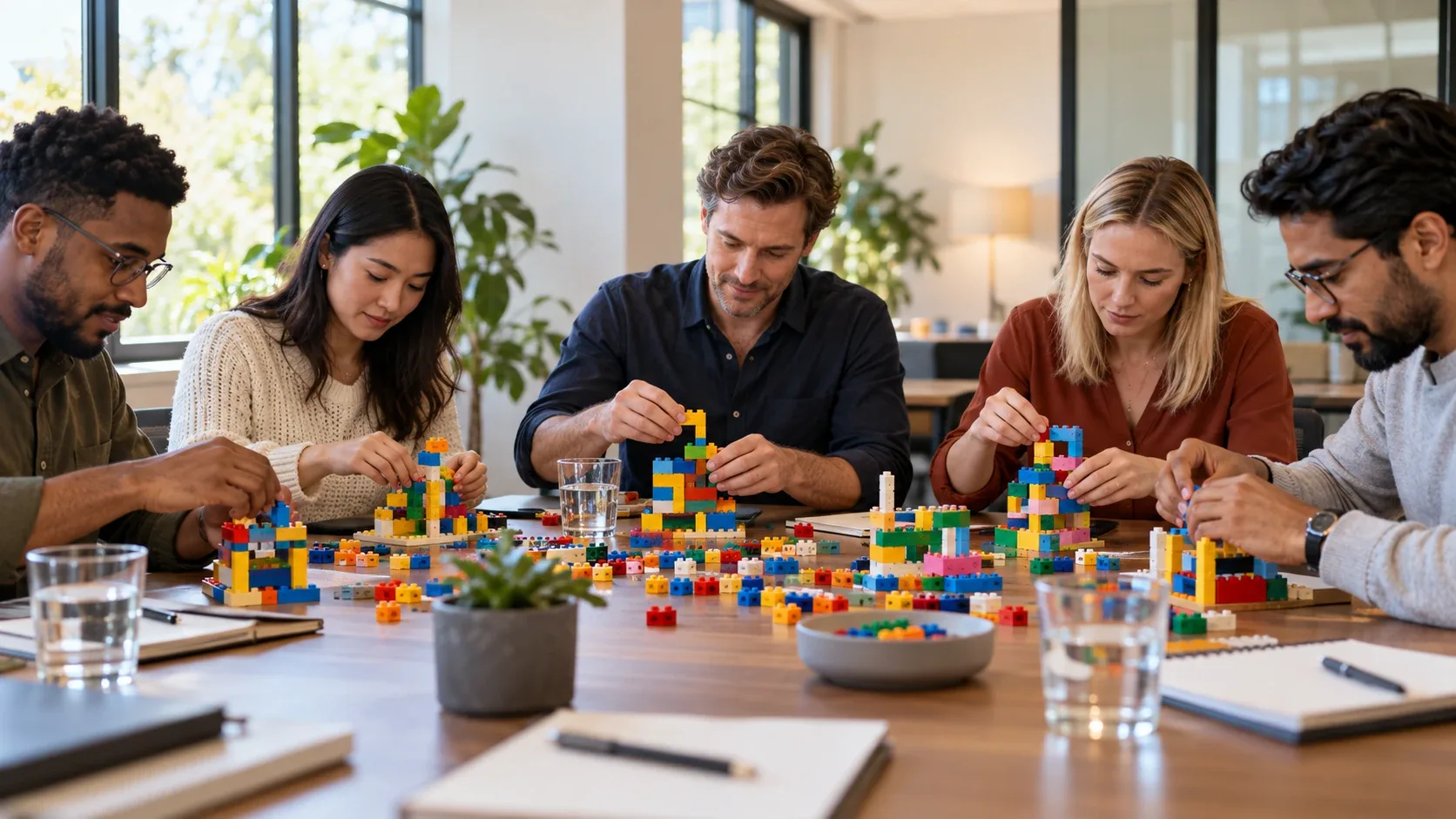
The sequence at the center of the method is simple. Every participant builds their own model in response to a question, then explains it to the group in their own words. Because everyone builds and everyone speaks, the session does not depend on who is most comfortable pitching an idea first.
What Teams Gain From Building
Building gives people something concrete to point to when they describe an idea that is not yet fully formed. The model makes that thinking visible, which gives colleagues something specific to ask about. The practical benefits of working this way include:
- Equal voice: every participant builds and explains, so the conversation is not dominated by a few people.
- Shared meaning: each person describes their model in their own words, so the group works from what was said rather than from assumptions.
- Visible thinking: a model can be discussed, questioned, and revisited in a way that an unspoken idea cannot.
- Agreed next steps: the session ends with commitments the group has made together.
In a LEGO® Serious Play® innovation workshop, every participant builds and explains their own model, so the ideas on the table come from the whole group instead of the loudest voice in the room.
Traditional Brainstorming vs. a LEGO® Serious Play® Session
Both formats have a place. The difference is in where the ideas come from and who does the work during the session.
| Dimension | Traditional brainstorm | LEGO® Serious Play® session |
|---|---|---|
| Who speaks | Whoever speaks up first or most | Every participant builds and explains |
| Where the ideas come from | Ideas called out aloud in the room | Each participant's own model and explanation |
| How quieter voices are heard | Depends on who chooses to speak up | Built into the structure, since everyone builds and everyone speaks |
| What the group leaves with | A list of ideas | A shared view the group has built and agreed next steps |
When Each Approach Fits
If the goal is to collect a quick list of suggestions, a traditional brainstorm can do that efficiently. If the goal is for a group to think together, surface differing views, and agree what to pursue, a building-based session puts the work in the hands of the group. Many organizations use both.
How to Run an Innovation Workshop
An innovation session works best when the question is chosen before anyone sits down. These five stages describe a sensible flow.
Frame the Innovation Question
Agree the question the group needs to answer, such as where the next opportunity might come from or what is slowing new ideas down. A clear question keeps the session useful and keeps every model pointed in the same direction.
Warm Up with a Simple Build
Start with a short, low-stakes build so everyone practices building and explaining a model. This removes any hesitation before the real question arrives.
Build Individual Idea Models
Pose the main question and give every participant time to build their own response at the same time. No one waits for a turn and no one is talked over.
Share Meaning, One Person at a Time
Invite each participant to explain what their model means to them. The facilitator makes sure every voice is heard, and colleagues ask questions about the model in front of them.
Build Shared Understanding and Agree Next Steps
Bring the individual models together into a shared view of the opportunity and capture what the group agreed. Finish by confirming who will do what next, so the session ends with something the team can act on.
An innovation session ends with a shared model and agreed next steps, so the work continues in the team's day-to-day rather than stopping at the workshop.
Choosing a Facilitator for Innovation Work
Innovation sessions ask a group to put half-formed ideas on the table, and the facilitator's skill sets the ceiling for the session. LEGO® Serious Play® requires practice and deep domain expertise. It is not enough to have read a few books or sat in a training room with the original provider.
Ask About Adaptation, Not Just Credentials
Skilled facilitation means planning and adapting to different group sizes, make-ups, and contexts, and thinking on your feet during both large and small events. Ask any prospective facilitator how they would adapt a session to your team, whether that group meets in one room, online, or in a hybrid setup. Our guide to running virtual and hybrid workshops covers the remote case in more detail.
What Standing and Support Look Like
Serious Play Business has more than 18 years of experience training facilitators around the world, and has trained more than 2,000 facilitators in all types of roles. Dr. Denise Meyerson was one of only four Master Trainers of the LEGO® SERIOUS PLAY® method selected by the LEGO® Group before the method went open source. She has trained facilitators for over 18 years across 25+ countries and is the author of three books on facilitation, including What the Duck.
If you want to build your own facilitation skills, see our LEGO® Serious Play® facilitator training, or read the journey of becoming a LEGO® Serious Play® facilitator. Our certification includes 40+ hours of self-paced content and individualized Q&A sessions and feedback from Dr. Meyerson.

Plan an Innovation Session That Fits Your Team
Tell us about your team and the question it needs to answer, and we will help you plan a workshop that fits.
To understand the full methodology behind the workshop design described above, read our full explanation of how the LEGO® Serious Play® method works.
Frequently asked questions
What is a LEGO® Serious Play® innovation workshop?
It is a facilitated session in which participants build physical models in response to an innovation question, such as where new ideas might come from or what is blocking them, then explain what each model means to them. Because everyone builds and everyone speaks, the group works from shared meaning instead of the loudest idea in the room.
How is it different from a traditional brainstorming session?
In a typical brainstorm the ideas that surface often come from the people who speak first or most. In a LEGO® Serious Play® session every participant builds and explains their own model, so the ideas on the table come from the whole group, and quieter voices are heard alongside louder ones.
Who should take part in an innovation workshop?
The method works for any group that needs to think together, from a product team to a cross-functional group to a leadership team. Skilled facilitation means planning for different group sizes, make-ups, and contexts, so the design of the session should fit the group in the room.
Can an innovation workshop be run online?
Yes. The core of the method does not change online: each person builds a model and explains what it means to them. The facilitator plans for pacing, camera visibility, and equal voice.
Does the facilitator matter for innovation sessions?
Yes. The method requires practice and deep domain expertise, and it is not enough to have read a few books. Look for a facilitator who adapts to your group and thinks on their feet.
How can I learn to facilitate innovation sessions myself?
Serious Play Business offers facilitator training and certification, which includes 40+ hours of self-paced content and individualized Q&A sessions and feedback from Dr. Meyerson.