
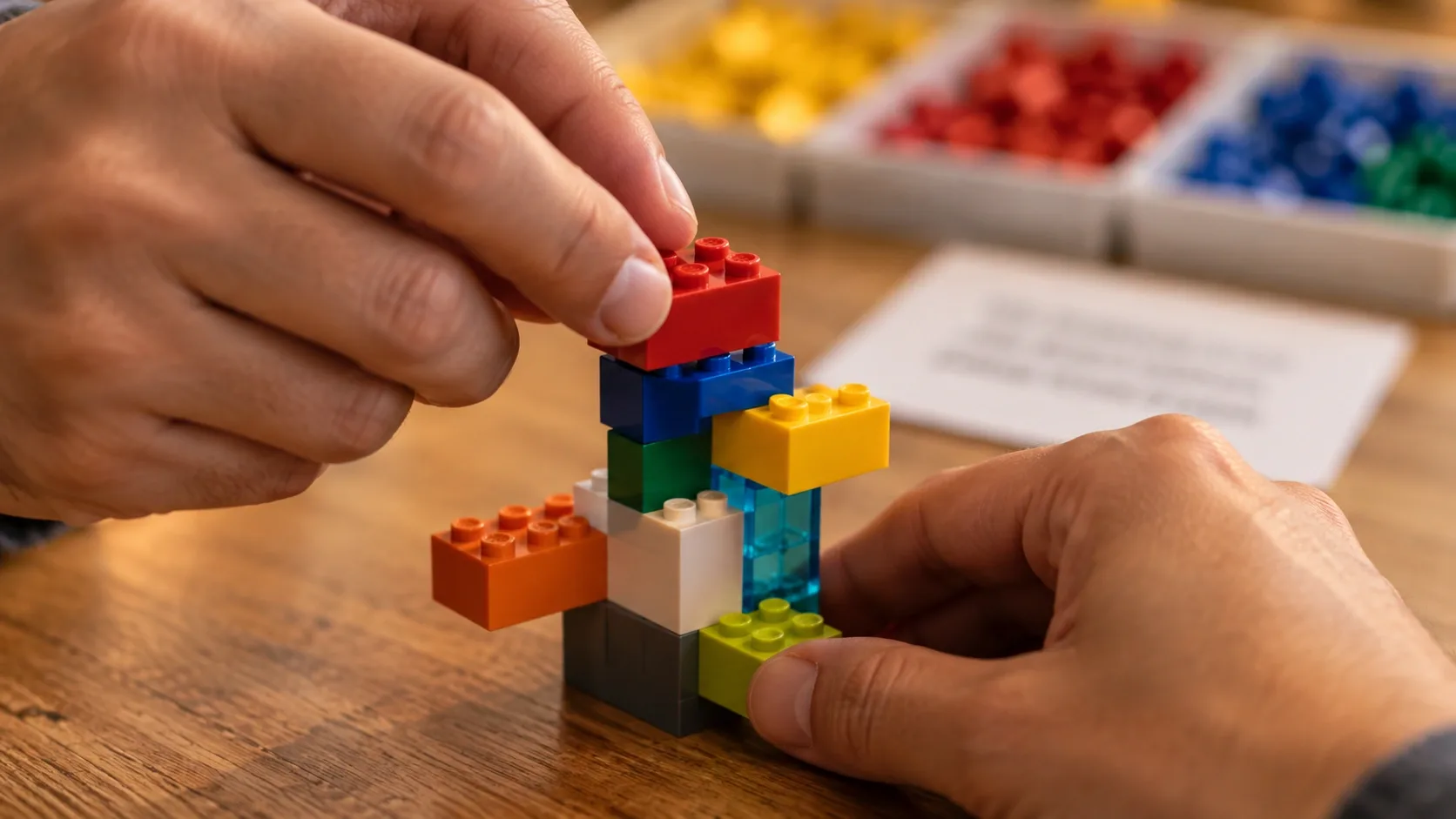
How to Design a LEGO® Serious Play® Strategic Planning Workshop
Part 2 of 3 in our series on strategic planning offsites. If you haven't read it yet, Part 1 covers why most strategic planning offsites don't change anything. This post covers how the workshop itself is actually designed and run.
The first post in this series looked at why a discussion-only planning offsite tends to produce alignment that doesn't hold — a format that rewards whoever speaks most confidently and ends in a deck rather than a decision. This post is the practical follow-up: how a LEGO® Serious Play® workshop is actually designed, from what to settle before the session to a sample two-day flow.
The short version is sequencing. Individual models get built before any group conversation happens, disagreement gets surfaced early instead of smoothed over, and the session ends with one shared model the group actually built together, not just a summary someone else wrote for them.
A LEGO® Serious Play® strategic planning workshop is designed around a specific sequence: individual models first, group sharing and clustering second, a shared model third, and specific commitments last — so the group's actual range of views is on the table before anyone starts converging on one answer.
- The workshop's structure, not just the LEGO® bricks, is what fixes the loudest-voice problem described in Part 1 of this series.
- Individual models come before group discussion in every stage of the session, by design.
- The session should end with a shared model and specific next steps, not just a synthesized summary.
Before the Workshop: Setting the Real Objective
A workshop designed around a vague goal produces a vague model. The most important design decision happens before anyone picks up a brick: getting specific about exactly what decision the group needs to leave the room having made.
Defining the Actual Decision You Need to Leave With
"Discuss our strategy" is not a workshop objective — it's a topic. A usable objective names the actual decision: which three initiatives get resourced next year, how the team will prioritize competing customer segments, or what the organization's non-negotiables are heading into a merger or a major market shift. The sharper the objective, the sharper the prompts the facilitator can build the session around.
Who Should Be in the Room (and Who Shouldn't)
A planning workshop works best with the smallest group that can actually make or meaningfully inform the decision, not the largest group that might feel left out if excluded. Adding people who aren't close to the decision tends to dilute the individual models rather than add useful perspective.
What to settle before the session, at minimum:
- The specific decision or set of decisions the workshop needs to produce
- Who genuinely needs to be in the room to make or inform that decision
- What information participants need before the session so their individual models reflect reality, not guesswork
- How the shared model and next steps will be documented and carried forward afterward
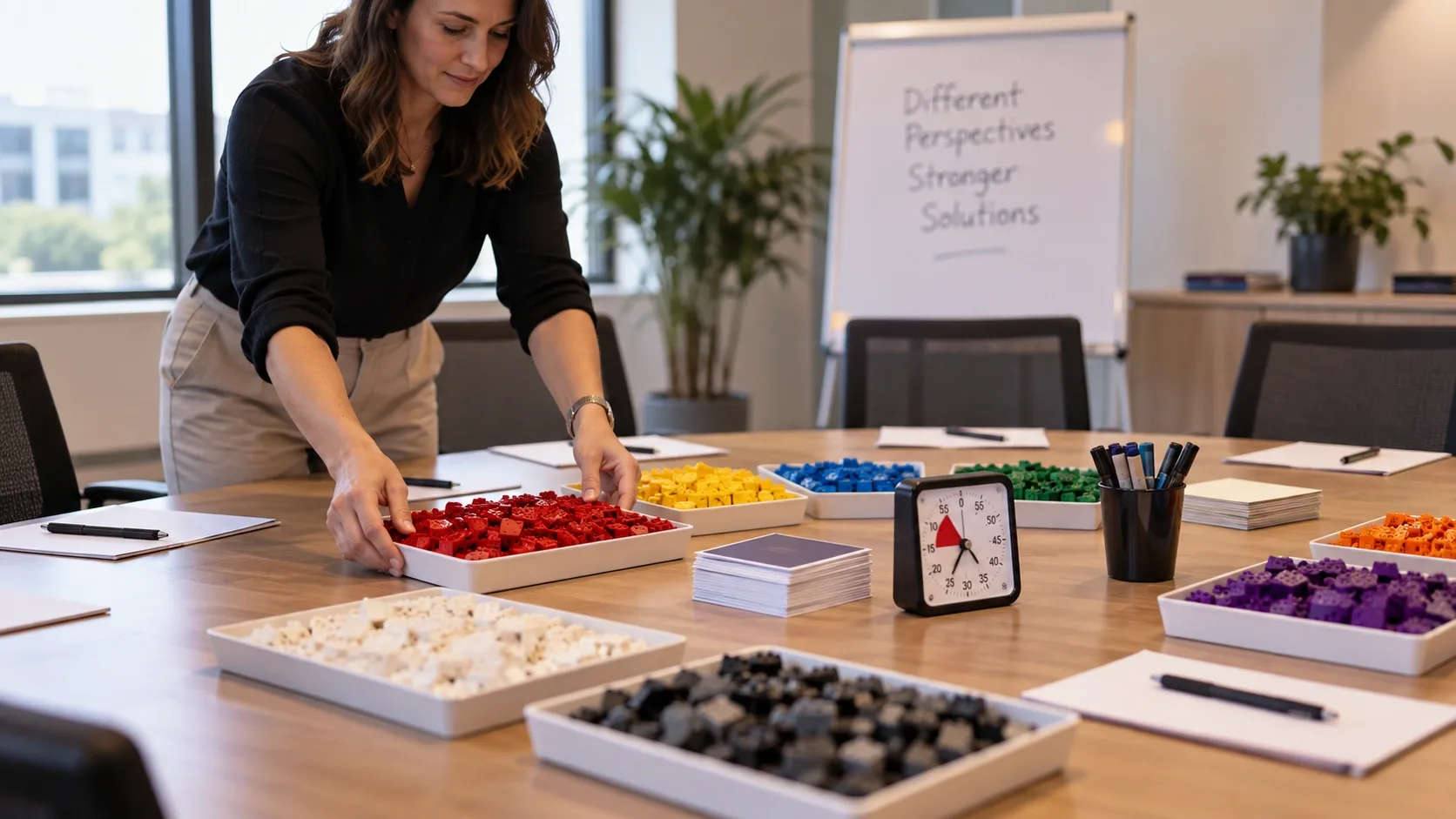
Inside the Workshop: What Actually Happens
Once the session starts, the format keeps returning to the same principle from Part 1 of this series: build before you talk. Every major exercise follows individual construction, then explanation, then group synthesis, in that order.
Individual Models Before Group Debate
Each participant builds their own model in response to a specific prompt tied to the session's objective, then explains it to the group without interruption. Only after every model has been built and shown does the facilitator open the floor to discussion, which means the group's full range of views is visible before anyone starts arguing for a single direction.
| Traditional Agenda Item | LEGO® Serious Play® Equivalent | What Changes |
|---|---|---|
| Open-floor SWOT discussion | Individual models of strengths and risks, built before discussion | Every view gets built and shown, not just the ones people volunteer out loud |
| Round-the-table status updates | Individual models of the current landscape | Updates become comparable models instead of a sequence of monologues |
| Leadership-drafted priority list for feedback | Group-built shared model of priorities | The group builds the priorities directly instead of reacting to someone else's draft |
Building the Shared Strategic Model
Once individual models have been shared and the facilitator has helped the group identify common themes and real points of disagreement, the group moves to building one shared model together. This step is a genuine negotiation over what belongs in the shared model and what doesn't — not a vote, and not a summary written by whoever's holding the marker.
A shared model the group had to negotiate into existence carries more weight afterward than a summary slide the group only reviewed.
Where This Fits Into a Broader Planning Cycle
The workshop itself is usually one structured session inside a longer planning cycle that includes data-gathering beforehand and follow-through afterward. It isn't meant to replace the analysis that should already be informing the conversation — it's meant to be the point where that analysis gets turned into an actual, tested, shared decision.
The workshop's job isn't to generate the strategic thinking from scratch — it's to force that thinking to become specific, visible, and shared before the room leaves.
A Sample Two-Day Strategic Planning Workshop Flow
The structure below is a representative two-day flow for a full strategic planning workshop. A facilitator adjusts the specific prompts and pacing to the decision your organization actually needs to make.
Individual Landscape Models
Each participant builds a model representing how they currently see the competitive, operational, or organizational landscape relevant to the planning question. This sets an honest, individual starting point before any group framing takes over.
Share and Cluster
Each participant explains their model. The facilitator captures recurring themes and points of real disagreement across the group, giving the room its first accurate picture of where views actually diverge.
Individual Priority Models
Building on the shared landscape view, each participant builds a model representing what they believe the priorities should be. This keeps the priority-setting conversation from starting with a blank page or a pre-written draft.
Build the Shared Priority Model
The group negotiates and builds one shared model representing the agreed priorities. This is the session's central exercise, and it's given the most time for a reason: it's where individual positions actually become one group decision.
Commit to Owners and Next Steps
The group translates the shared model into a short list of specific commitments, each with a named owner. The next post in this series covers how to carry this step through into an execution plan that survives the following quarter.
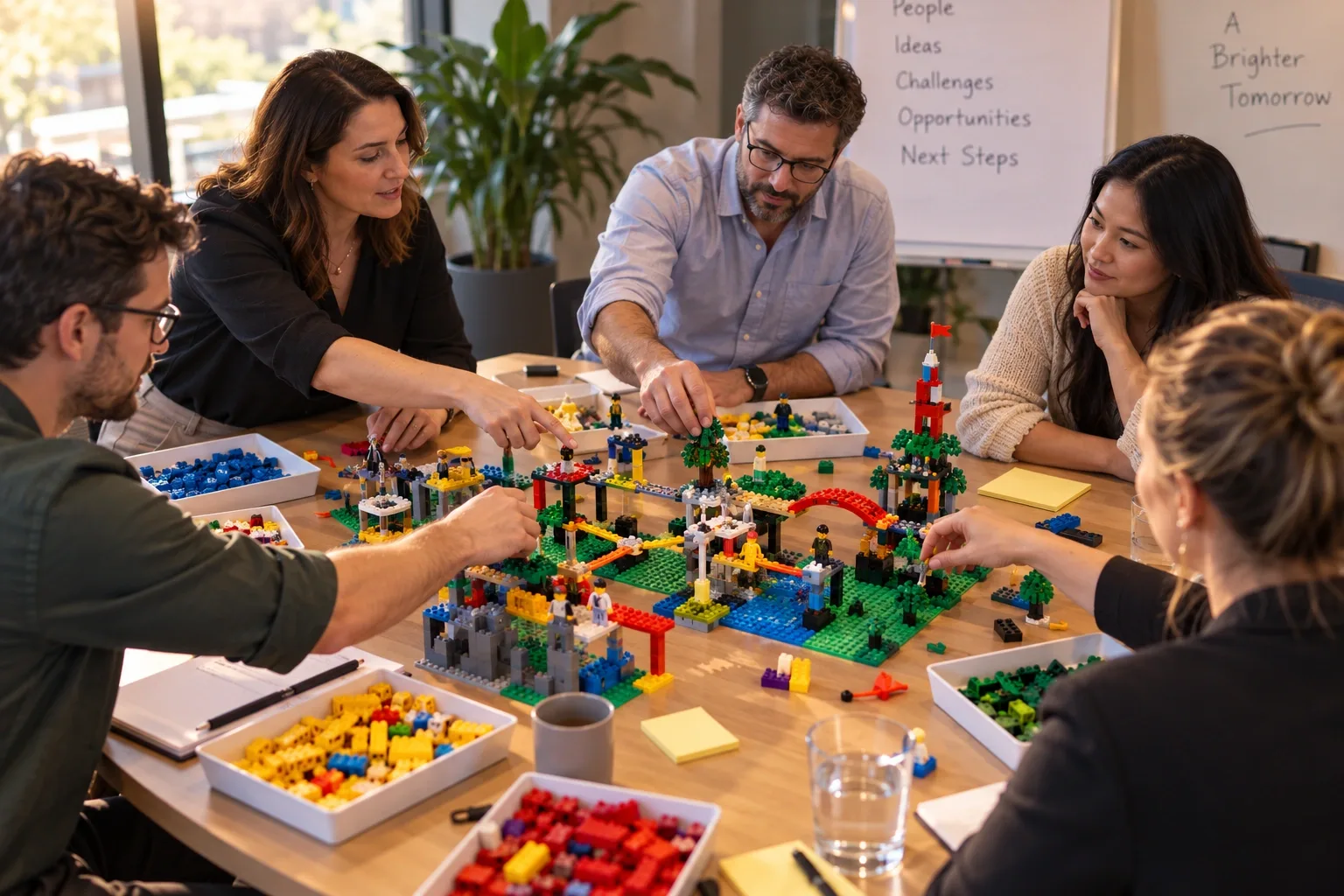
How Much of This to Facilitate Yourself vs. Bring In a Trainer
Not every planning workshop needs an outside facilitator, but the stakes of the session should drive that decision more than budget alone. A workshop touching real organizational disagreement, a sensitive restructuring question, or a decision with significant resourcing implications is a different proposition from a lower-stakes team-level planning conversation. Whether you use an internal team member or bring in outside LEGO® Serious Play® facilitators, the questions below are worth working through explicitly rather than assuming the answer.
Questions to Ask Before Deciding
- Does this session involve disagreement between people at different levels of seniority, where an internal facilitator might feel pressure to favor one side?
- Has whoever would facilitate internally actually completed real LEGO® Serious Play® certification, or only sat in on a session someone else ran?
- What happens if a participant's model surfaces something leadership didn't expect — does the facilitator have a way to work with that in the room?
Why Facilitator Experience Matters More at This Level
Serious Play Business built its facilitator training around Dr. Denise Meyerson's experience with the method. Dr. Denise Meyerson was one of only four Master Trainers of the LEGO® SERIOUS PLAY® method selected by the LEGO® Group before the method went open source. She has trained facilitators for over 18 years across 25+ countries and is the author of three books on facilitation, including What the Duck. A strategic planning session carries higher stakes than a typical team workshop, which is exactly where that depth of experience reading a room matters most.
Some organizations also pair a session like this with ongoing LEGO® Serious Play® coaching for the leaders who'll be driving execution afterward — useful context heading into Part 3 of this series, which covers what happens after the workshop ends.
Get Your Next Planning Workshop Designed Around Your Actual Decision
Part 3 of this series covers how to turn the shared model from a session like this into a plan your team actually executes through the quarter. If your next planning cycle is coming up, we can help design the session itself.
To understand the full methodology behind the workshop design described above, read our full explanation of how the LEGO® Serious Play® method works.
Frequently asked questions
How is a LEGO® Serious Play® planning workshop different from a normal strategy offsite?
Every participant builds and explains an individual model before any group discussion starts, instead of the room moving straight into open conversation. That sequencing surfaces disagreement and quieter perspectives earlier, and the session ends with a shared physical model rather than only a slide summary.
How long does a LEGO® Serious Play® strategic planning workshop take?
A full strategic planning session is often run across two days to leave room for individual models, group synthesis, and the shared model-build without rushing any stage. Narrower planning questions can sometimes be handled in a single day.
How many people should be in the room for a planning workshop?
Most planning workshops work best with a focused group who actually need to be part of the decision, rather than the full extended team. A smaller, decision-relevant group keeps individual model-building and group synthesis manageable within the session time.
What happens to the shared model after the workshop ends?
The shared model is meant to be documented and referenced, not packed away. It becomes the reference point for the specific plan the team commits to, which the next post in this series covers in detail.
Can we run this internally, or do we need an outside facilitator?
It depends on the stakes of the session. A lower-stakes planning conversation can sometimes be run by an internal facilitator trained in the method. A session involving real organizational disagreement or high-stakes decisions benefits from an experienced outside facilitator who can read the room without being part of the politics in it.
What is a Master Trainer of LEGO® Serious Play®?
A Master Trainer is one of a small number of facilitators selected directly by the LEGO® Group, before the method went open source, to train other facilitators in the method. Dr. Denise Meyerson, who shapes Serious Play Business's training approach, was one of only four Master Trainers selected.