
How LEGO® Serious Play® Turns Team Building Into a Way of Working
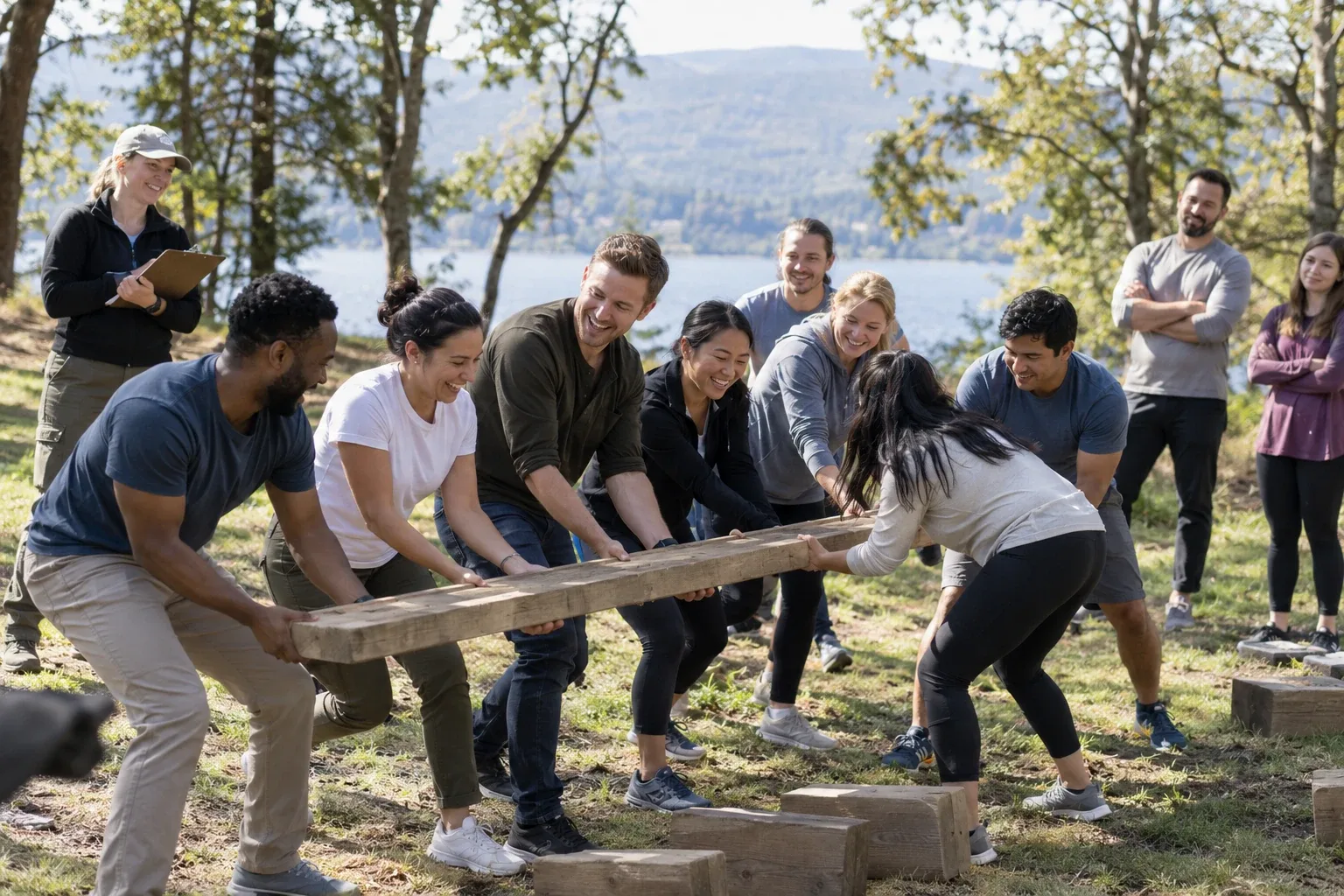
Most team-building days produce a good afternoon and very little else. A trust fall, an escape room, or a round of low-stakes trivia can genuinely bring a team closer for an hour, but none of it requires anyone to say out loud how they actually want to work together — what they need from teammates, where trust breaks down, or what "good collaboration" looks like on this specific team. Without that, Monday looks exactly like the Friday before.
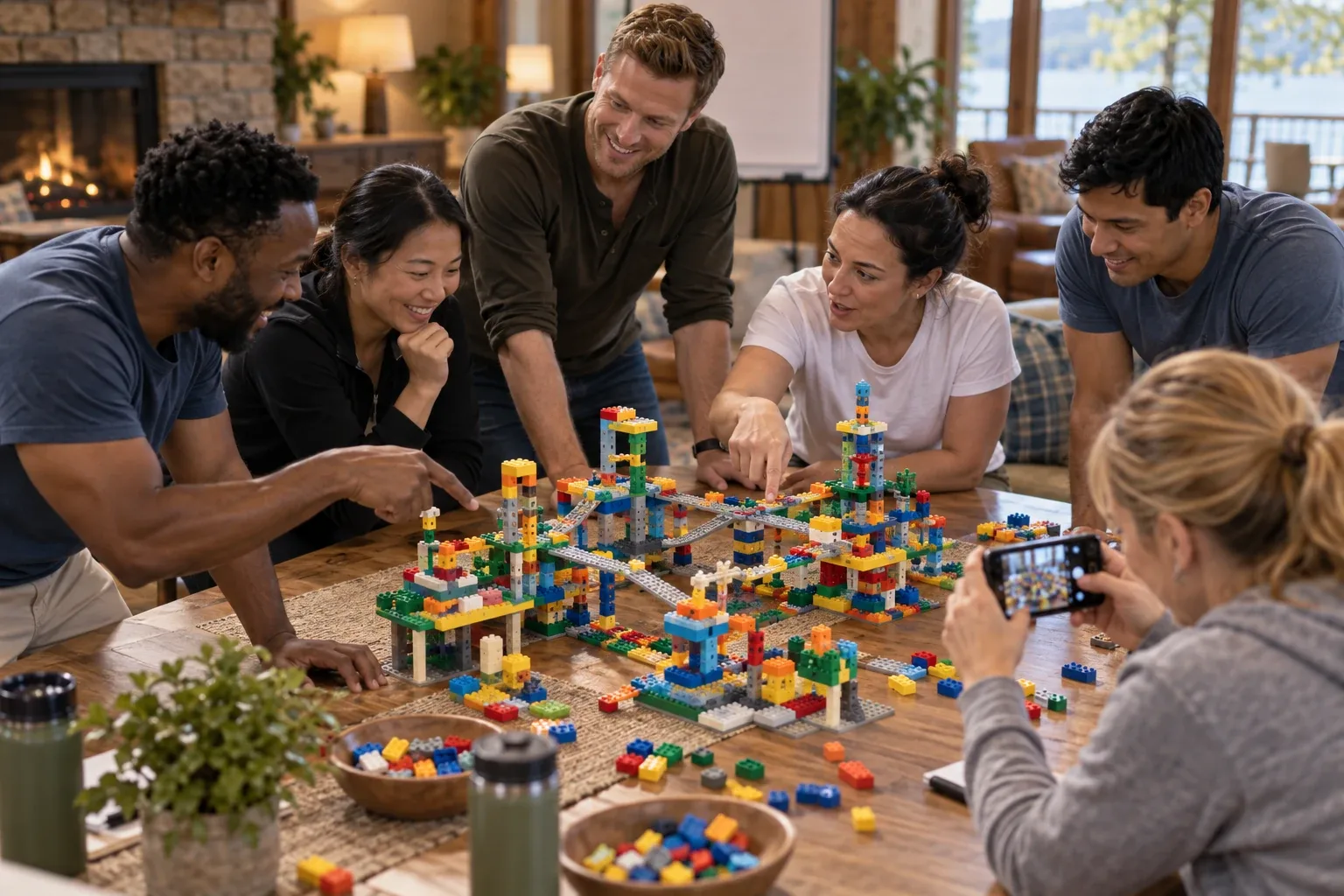
LEGO® Serious Play® approaches team building differently. Every participant builds physical models that represent how they work and what they need from the people around them, then shares those models with the group before anyone tries to summarize what the team is "really like." The session ends with a shared model of how the team agrees to work together — a concrete reference point the day-off version of team building rarely produces.
LEGO® Serious Play® team building works by having every participant build and explain individual models of how they work and what they need from teammates, then guiding the group to build one shared model of working agreements — turning a one-day experience into a reference the team can actually use afterward.
- A team-building activity built around shared fun, without a structured way to surface how people actually want to work together, tends to fade by the time the team is back at its desks.
- Building individual models before any group discussion gives quieter team members the same airtime as the most talkative person in the room.
- The workshop's real output is a shared model of working agreements the team can point back to, not the memory of a well-run activity.
Why Most Team-Building Days Don't Change How a Team Works
Team building usually gets budgeted as a single event: book a venue or an activity provider, block out an afternoon, and hope the shared experience translates into better collaboration afterward. The experience itself can be genuinely enjoyable. What it rarely does is give the team a structured way to work through the specific things that actually get in the way of collaboration day to day.
Fun in the Room, No Change Back at the Desk
A trust fall or an escape room creates a shared memory, and shared memories do build some goodwill. But goodwill isn't the same as a working agreement. Nothing about solving a puzzle together requires the team to articulate how they'll actually handle a missed deadline, a disagreement in a meeting, or a teammate who goes quiet under pressure — the things that determine whether a team works well together long after the activity is over.
What Gets Measured vs. What Actually Matters
Post-event surveys tend to ask whether people had a good time, which is an easy question to answer and a poor proxy for whether anything about how the team works actually changed. A team can report high satisfaction with a team-building day and still be back to the same friction points — the same person dominating meetings, the same unspoken assumptions about who owns what — within a week.
Patterns that show up in team-building days that don't produce lasting change:
- The activity is fun but disconnected from anything the team actually struggles with day to day
- Quieter team members participate less than the most outgoing people in the room, the same way they do in a normal meeting
- Nothing concrete comes out of the day beyond a shared memory and a few photos
- The same friction points — unclear ownership, unspoken assumptions, uneven participation — resurface within days
- Newer or more junior team members leave with no clearer sense of how the team actually operates than they had going in
What LEGO® Serious Play® Does Differently
The method's core mechanic — build a model, then explain it — asks something a shared activity doesn't: for each person to get specific about how they actually work and what they need from the people around them, in a form the rest of the group can see and respond to.
Every Voice Builds Before Anyone Talks
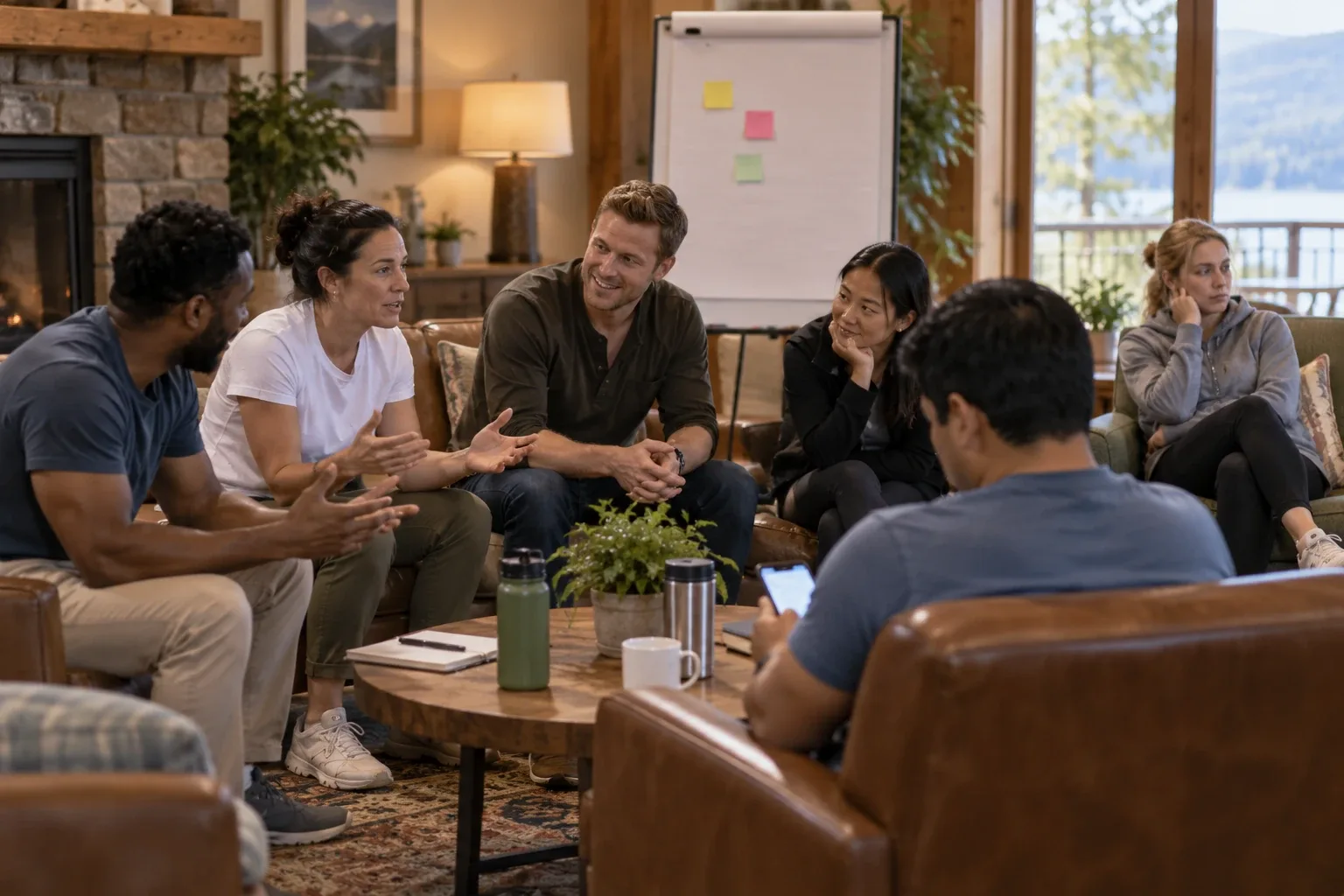
Individual models come first, before any group conversation happens. In a typical team-building activity, the most talkative or confident people tend to set the tone, and quieter team members often participate on the sidelines. Because every participant has to build and explain their own model, the format structurally gives each person the same airtime, regardless of how comfortable they are speaking up first in a group.
| Dimension | Typical Team-Building Day | LEGO® Serious Play® Workshop |
|---|---|---|
| What's shared | An experience — a game, a challenge, an outing | Individual models of how each person works and what they need |
| Who's heard | Whoever is most comfortable speaking up in the group | Every participant, through their own model and explanation |
| What comes out of it | A shared memory and, usually, some photos | A shared model of working agreements the team built together |
| What happens Monday | Business as usual, with slightly better rapport | A concrete reference point the team can point back to |
The Shared Model as a Working Reference, Not a Souvenir
Once individual models are on the table and the facilitator has helped the group find the common threads and the real points of friction, the group builds one shared model representing how the team agrees to work together going forward — how it wants to handle disagreement, communication, or ownership. That model is meant to be documented and referred back to, not photographed once and filed away.
A team that builds its own working agreements is more likely to actually follow them than a team that only heard someone else describe good teamwork.
Where Team-Building Workshops Fit Into a Broader People Strategy
A single team-building session, however well designed, works best as part of a broader effort rather than a stand-alone fix for a team that's genuinely struggling. It's a strong tool for establishing how a team works together in the first place, and for resetting that understanding at specific moments when the team itself has changed.
Onboarding a New or Newly Merged Team
A newly formed team, or a team formed by merging two existing groups, has no shared working history to draw on. Left alone, that history gets built slowly and unevenly, through trial and error over months. A structured workshop gives the group a fast, deliberate way to establish working agreements early, before default habits and assumptions have had time to calcify into friction.
Pairing a Single Session With Ongoing Practice
A workshop is a strong reset point, but it isn't a substitute for how the team manages day-to-day collaboration afterward. The shared model it produces works best when it's actually referenced in team meetings and one-on-ones, not left as a one-time artifact from a single good day. Some teams pair the initial session with ongoing LEGO® Serious Play® coaching to keep the working agreements active rather than letting them fade the way a typical team-building day does.
A team-building workshop resets how a team works together; it doesn't maintain that on its own — the team still has to keep using what it built.
Inside a Team-Building Workshop: A Sample Flow
A typical session runs three to four hours with a group of six to fourteen participants. The flow below is a representative structure — a facilitator adapts the specific prompts to what the team actually needs to work through.
Build Your "How I Work" Model
Each participant builds a model representing how they work best — what helps them do good work and what gets in the way. This establishes an honest individual starting point before the group talks about the team as a whole.
Build Your "What Trust Looks Like to Me" Model
Participants build a second model representing what builds trust for them on a team, and what erodes it. This gets specific, individual expectations on the table instead of leaving "trust" as an abstract word everyone privately defines differently.
Share and Cluster the Models
Each participant explains their models to the group. The facilitator listens for recurring themes and real differences across the individual models, giving the team its first accurate picture of where views actually align and where they don't.
Build the Shared "How We Work Together" Model
Using the clustered themes as raw material, the group builds one shared model representing how the team agrees to work together. This is a genuine negotiation, not a summary — the model has to represent something everyone in the room helped build and can point back to.
Commit to Working Agreements
The group turns the shared model into a short list of specific working agreements — how the team will handle disagreement, communication, or ownership — and agrees on how those agreements will actually get revisited afterward.
How to Know If Your Team Needs This Conversation
Not every team needs a full team-building workshop, and not every team-building need calls for this particular format. It tends to be worth the investment when the team's working relationships, not just morale, are what actually need attention.
Signals It's Time for a Workshop
A few patterns tend to indicate a team is ready for this kind of session: the team has recently changed shape through a merger, reorganization, or a wave of new hires; the same friction points keep resurfacing despite good intentions on all sides; or previous team-building days have produced good feelings without any real change in how the team actually collaborates.
Choosing a Facilitator for Team-Building Work
Team dynamics can be sensitive territory — a session that surfaces real friction without a way to work with it constructively can leave a team worse off than before it started. The same credibility questions worth asking of any LEGO® Serious Play® provider apply here, with particular weight on experience facilitating genuine interpersonal dynamics, not just ideation exercises.
Questions to Ask Before You Book
- How many years has the facilitator been running LEGO® Serious Play® sessions, and with what kinds of groups?
- Has the facilitator run team-dynamics or team-building sessions specifically, or mainly strategy and ideation workshops?
- Who trained the facilitator, and were they trained by someone with recognized standing in the method — through real LEGO® Serious Play® facilitator training, not just having sat in on a session someone else ran?
- If a participant's model surfaces real friction between teammates, does the facilitator have a way to work with that constructively in the room?
Why Facilitator Experience Matters More When Trust Is the Subject
Serious Play Business built its facilitator training around Dr. Denise Meyerson's experience with the method. Dr. Denise Meyerson was one of only four Master Trainers of the LEGO® SERIOUS PLAY® method selected by the LEGO® Group before the method went open source. She has trained facilitators for over 18 years across 25+ countries and is the author of three books on facilitation, including What the Duck. That depth of experience matters most in sessions where the subject is the team's own working relationships, not just its strategy or plans.
Give Your Team a Way of Working, Not Just a Day Off
If your last team-building day left everyone smiling with nothing to show for it by Monday, a facilitated LEGO® Serious Play® session can turn the next one into a working agreement your team actually keeps using.
To understand the full methodology behind the workshop design described above, read our full explanation of how the LEGO® Serious Play® method works.
Frequently asked questions
What is LEGO® Serious Play® team building and how is it different from typical team-building activities?
LEGO® Serious Play® team building is a facilitated workshop where every participant builds physical models to represent how they work, what they need from teammates, and what trust looks like to them, then shares those models with the group. Unlike a trust fall or an escape room, the point isn't a shared experience alone — it's a shared, specific understanding of how the team will actually work together afterward.
How is this different from a trust fall, escape room, or ropes course?
Those activities create a shared experience and can genuinely be fun, but they don't require anyone to articulate how they actually want to work with their teammates day to day. A LEGO® Serious Play® session ends with a concrete, shared model of working agreements the team built together, which gives the day something to carry back to the desk.
How long does a LEGO® Serious Play® team-building workshop take?
A typical session runs three to four hours with a group of six to fourteen participants, covering individual models, sharing and clustering, a shared team model, and a working-agreements step. Teams with more complex dynamics to work through sometimes extend it to a full day.
Do participants need any building or LEGO experience?
No. The facilitator gives a prompt before every build and guides participants through the process. The value comes from what a model represents and how a person explains it, not from how polished or complex it looks.
Is this useful for a newly formed or newly merged team?
Yes — it's one of the more common reasons teams book this kind of session. A newly formed or newly merged team has no shared working history to draw on, and building individual and shared models gives the group a fast, structured way to establish one instead of discovering it by trial and error over several months.
What is a Master Trainer of LEGO® Serious Play®?
A Master Trainer is one of a small number of facilitators selected directly by the LEGO® Group, before the method went open source, to train other facilitators in the method. Dr. Denise Meyerson, who shapes Serious Play Business's training approach, was one of only four Master Trainers selected.