

Every LEGO® SERIOUS PLAY® workshop begins long before the “real work” starts. The warm-up is where participants shift from thinking in words to thinking in models; from being self-conscious to being present; and from staying safe to taking creative risks. A great LSP warm-up isn’t about building something cute. It’s about preparing the brain for clarity, curiosity, and psychological safety.
Summary: A powerful LSP warm-up primes the brain for insight, opens communication channels, and sets the tone for a high-impact workshop — in under 10 minutes.
Click the '+' button on the sections below to explore the core steps of an effective warm-up.
Step 1: Activate the Senses
Warm-ups should immediately engage hands (motor cortex), imagination (visual-spatial regions), and emotions (limbic system). Three proven warm-ups that always work:
- Build a Tower That Represents Your Morning: Fast, metaphor-friendly, and zero pressure. Great for easing new participants into symbolic thinking.
- Build the Fastest Thing You Can Think Of: Activates imagination and speed, which triggers playful energy and creativity.
- Build Your Superpower (Without Using a Minifigure): Forces metaphor, unlocks deeper stories, and helps shy participants find their voice.
These all prime the hand-brain connection, a core principle of the LEGO® SERIOUS PLAY® methodology.
Step 2: Explain the Rules for Safety
Here’s where many new facilitators fail. You must set expectations clearly and confidently. Key rules to state:
- Everyone builds. Everyone shares. LSP collapses hierarchy and invites equal participation.
- The meaning lies in the builder, not the model. This encourages story ownership and removes judgment.
- There are no wrong answers. Only perspectives. This instantly lowers fear and activates psychological safety.
These rules prepare the group for deeper work later — especially during alignment, culture, or strategy sessions.
How to Be a Better Facilitator
Step 3: Timebox with Purpose
Warm-ups should be between 3 to 7 minutes. Why? It's long enough to activate creativity but short enough to maintain energy. Timeboxing creates productive pressure and signals that everyone can build—even when they think they can’t.
Step 4: Use Follow-Up Questions That Unlock Reflection
This is where SPB-trained facilitators shine. Ask:
- “What does this model say about how you’re arriving today?”
- “What surprised you as you built?”
- “What would you add if you had 30 more seconds?”
These questions turn a simple build into a moment of insight. This is exactly what participants love — when a “simple build” reveals something meaningful.
Step 5: Connect the Warm-Up to the Workshop Purpose
This is the bridge that inexperienced facilitators often miss. A warm-up should always “open the door” to the real work. If the session is about:
- Team alignment: Connect the warm-up to the diversity of perspectives.
- Culture: Connect it to shared meaning-making.
- Complex problem-solving: Connect it to the power of making thinking visible.
- Leadership development: Connect it to clarity, presence, and reflection.
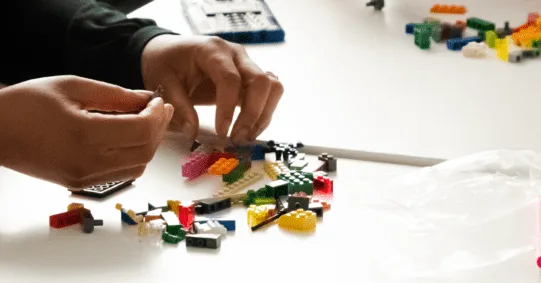
Why This Works: The Neuroscience Behind a Great Warm-Up
A brief but powerful physiological explanation:
- Hands-on building activates the motor cortex, which improves focus.
- Metaphor-making triggers deeper cognitive networks, improving reflection.
- Storytelling engages emotional pathways, which improves memory and connection.
- Group sharing builds oxytocin, improving trust and collaboration.
This is why LSP isn’t “fun building” — it’s brain-optimized meaning-making.
Key Takeaways
- A strong warm-up sets the emotional, cognitive, and creative tone.
- It prepares participants to think visually, metaphorically, and collaboratively.
- The method works because it activates hand-brain pathways linked to insight.
- Warm-ups are not optional — they’re foundational.
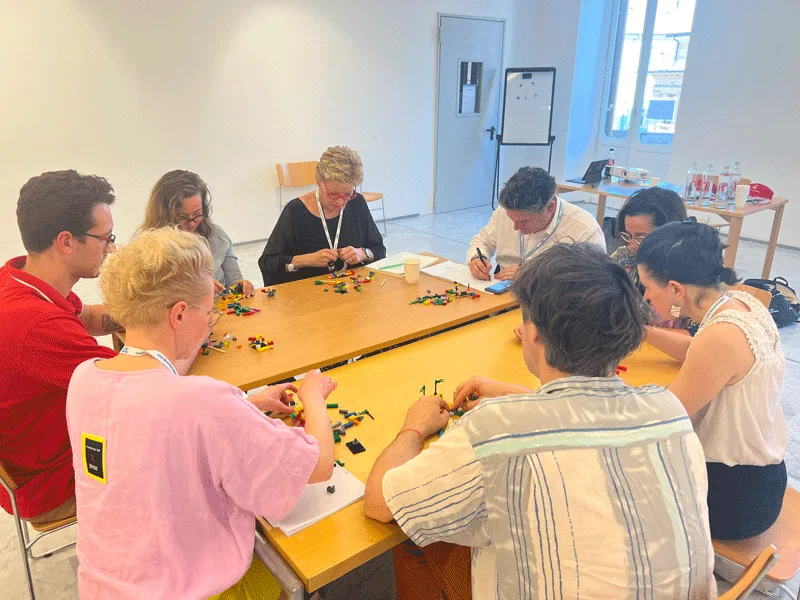
Frequently Asked Questions (FAQ)
Q: What is LSP training actually like?
A: The training is immersive. It combines the Core Process, Application Techniques, and real facilitation practice. You use LEGO kits in a safe learning environment.
Q: Do I need to be creative for LSP?
A: No. The focus is on guiding conversations, not model artistry. LEGO bricks work as metaphors, not sculptures.
Q: How do I prepare for facilitator training?
A: Come with an open mind. Review basic facilitation methods. Think about how you will use LSP in learning and development, innovation, or organizational problems.
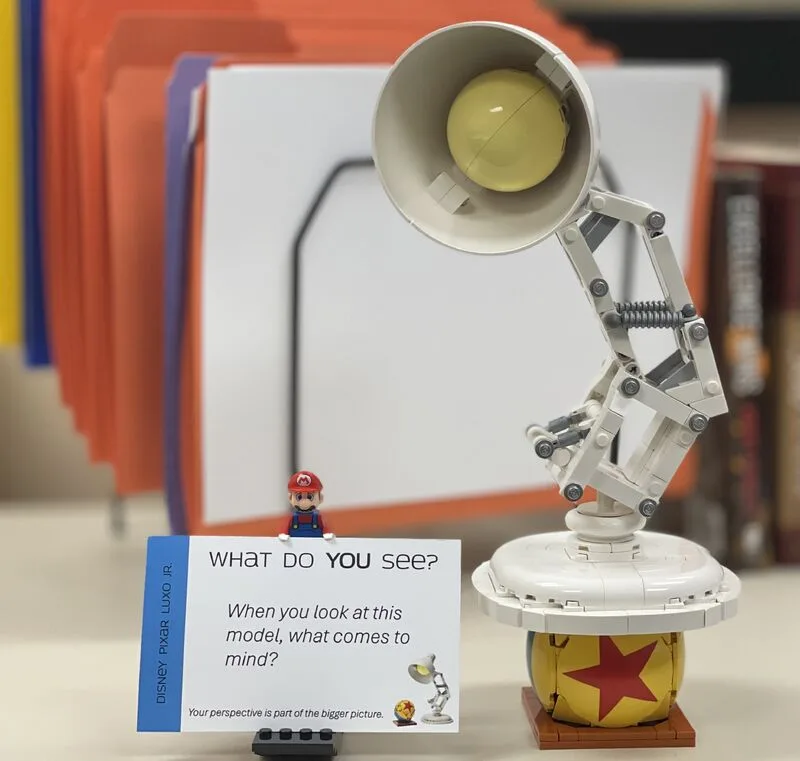
Related Reading: Seeing Leadership Through a LEGO® Lamp
Discover how Executive Coach Vince Araujo turned a simple LEGO® lamp into a powerful reflection on leadership and perspective.
Read The Story