

What Is a Master Trainer of LEGO® SERIOUS PLAY®? Why Your Trainer’s Credentials Matter in 2026
“Master Trainer” is the most quoted credential in the LEGO® SERIOUS PLAY® world. However, it is also the least understood. The title comes from the small group who developed and ran the global facilitator training programs during the LEGO® Group’s partner-program era, before the method went open source in 2010. Today, no trainer is appointed or approved by the LEGO® Group. As a result, the title’s value rests entirely on verifiable history.
This guide explains where the Master Trainer title comes from and what it does and does not guarantee. It also gives you the questions to ask any provider, and a five-step process for verifying a trainer’s credentials before you pay for certification.
Direct answer: A Master Trainer of LEGO® SERIOUS PLAY® is a member of the original generation of trainers who built and delivered the method’s global facilitator training before 2010. The title is historical, not a current LEGO® Group appointment. Therefore, when choosing a trainer, verify three things: their documented pre-2010 lineage or decades of delivery, their real-world facilitation record, and the rigor of their training program.
The Short History That Explains Every Credential
Almost every confusing claim in this market traces back to one turning point. Understanding it takes two minutes. After that, every provider’s credentials become much easier to read.
Before 2010: the partner-program era
The LEGO® Group originally ran LEGO® SERIOUS PLAY® as a structured licensing program. A very small group of trainers developed the training curriculum and delivered the global facilitator programs on the company’s behalf. This group became known as the Master Trainers. Dr. Denise Meyerson of Serious Play Business was one of only four Master Trainers of the methodology selected during this era, before the method went open source.
2010 and after: open source changes everything
In 2010, the LEGO® Group released the basic method under a Creative Commons license. From that point on, the company’s involvement has been limited to selling the dedicated brick kits. Consequently, there are no LEGO®-appointed trainers, no official training board, and no providers with special status. Any credential you see today is issued by a private provider or a community body — never by the LEGO® Group.
Because no LEGO®-appointed trainers have existed since 2010, “Master Trainer” is a historical credential: its value comes from verifiable pre-2010 lineage and decades of documented delivery, not from any current appointment.
What “Master Trainer” Actually Means Today
The title survives because the original training generation kept teaching. However, different organizations now use it in different ways. Knowing the landscape helps you weigh each claim correctly.
The original generation
The strongest use of the title refers to the people who actually built and ran LEGO®’s facilitator training before 2010. This group is tiny. Its members have since trained thousands of facilitators through their own programs and communities. Their authority rests on documented history, not on membership of any body.
The community bodies that use the title
Two organizations anchor the title today. The Association of Master Trainers was founded by method co-creators Robert Rasmussen and Per Kristiansen and maintains a registry of trainers it recognizes. Meanwhile, the Global Federation of LSP Master Trainers operates around Strategic Play’s training network. Both are legitimate professional communities. However, both are private bodies applying their own standards — neither confers LEGO® Group approval, because no such approval exists.
What the title is not
A Master Trainer title is not a LEGO® appointment, a legal license, or a regulated qualification. Likewise, membership of an association is a community standard, not an official one. This is not a criticism of any provider. Instead, it simply means the burden of verification sits with you, the buyer.
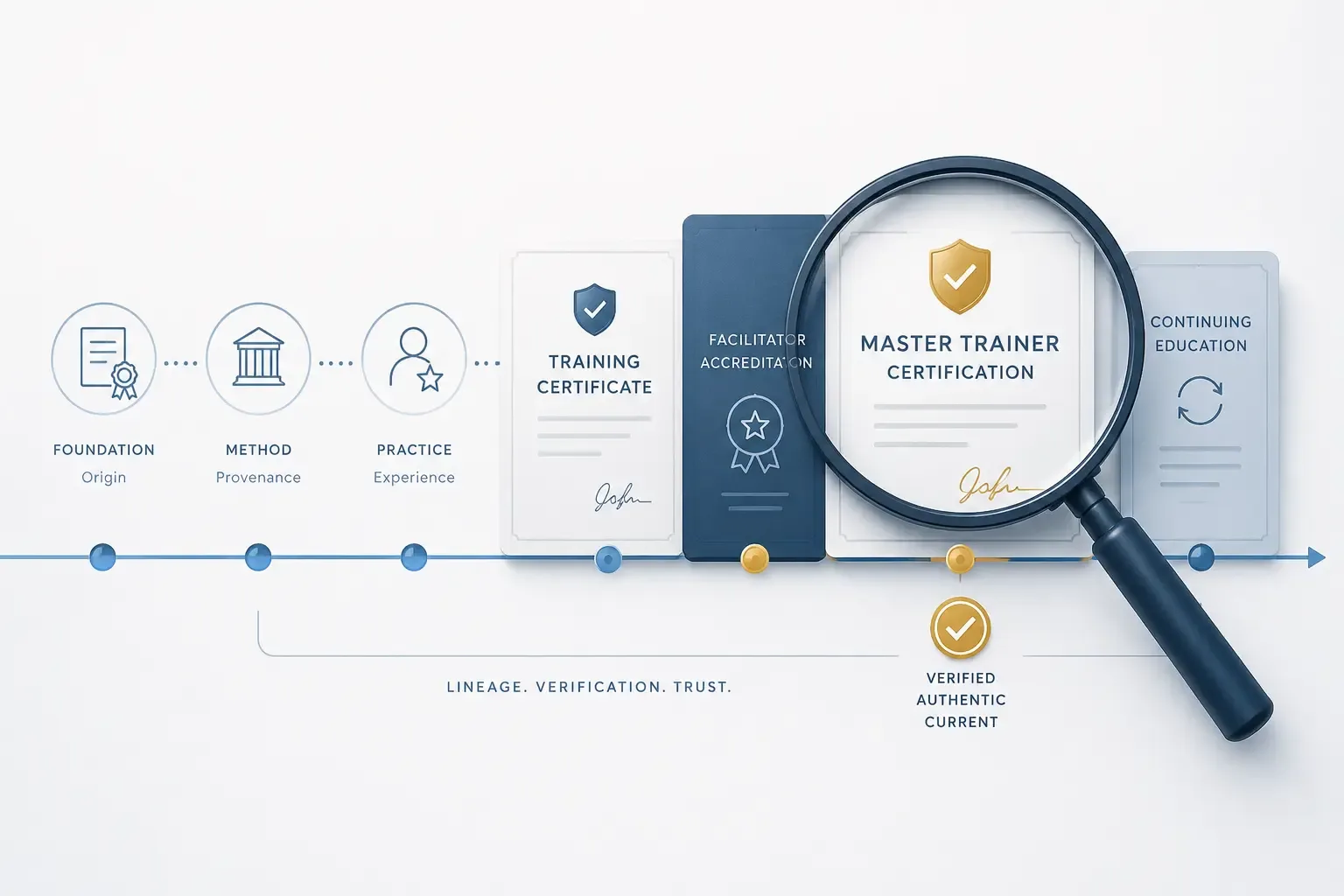
Why Your Trainer’s Experience Matters So Much
If titles are unregulated, experience becomes the real credential. This matters because of how the method itself works.
Facilitation is practiced, not read
LEGO® SERIOUS PLAY® requires deep domain expertise and genuine practice. It is not enough to have read a few books or sat in a training room once. Skilled facilitation means planning and adapting to different group sizes, make-ups, and contexts. Above all, it means thinking on your feet during live events, both large and small. A trainer can only teach that judgment if they have exercised it for years.
What deep experience looks like in practice
Consider the profile of a genuinely experienced trainer. Dr. Denise Meyerson has facilitated large and small groups worldwide for clients such as Microsoft, Coca-Cola, SAP, and Cisco. She was the 2023 Visiting Scholar at Virginia Commonwealth University. In addition, she has presented at global events including the Training Magazine Conference in Orlando and CREA, Europe’s premier innovation event. Over 18+ years, she has trained more than 2,000 facilitators across consulting, HR and Learning & Development, and academia. That is the depth of record you should look for — from any provider you consider.
A trainer’s client list, teaching record, and years of delivery are harder to fake than a title: verify the record first, and let the credential follow.
Questions to Ask Any Provider Before You Enroll
Frame your comparison as buyer education, not brand loyalty. Therefore, put the same four questions to every provider on your shortlist:
- How long have you been training facilitators? Longevity signals refinement. For example, a provider with 18+ years of global delivery has seen the method applied across markets, industries, and cultures.
- What is your real-world facilitation record? Ask for named clients, event types, and group sizes. A trainer who still facilitates for major organizations teaches from current practice, not memory.
- What is your lineage in the method? Pre-2010 Master Trainer history is the strongest possible answer. Alternatively, decades of documented delivery can carry similar weight.
- What does your certification actually assess? Look for results-focused certification with assessed practical work — not just membership of an association or attendance at a course.
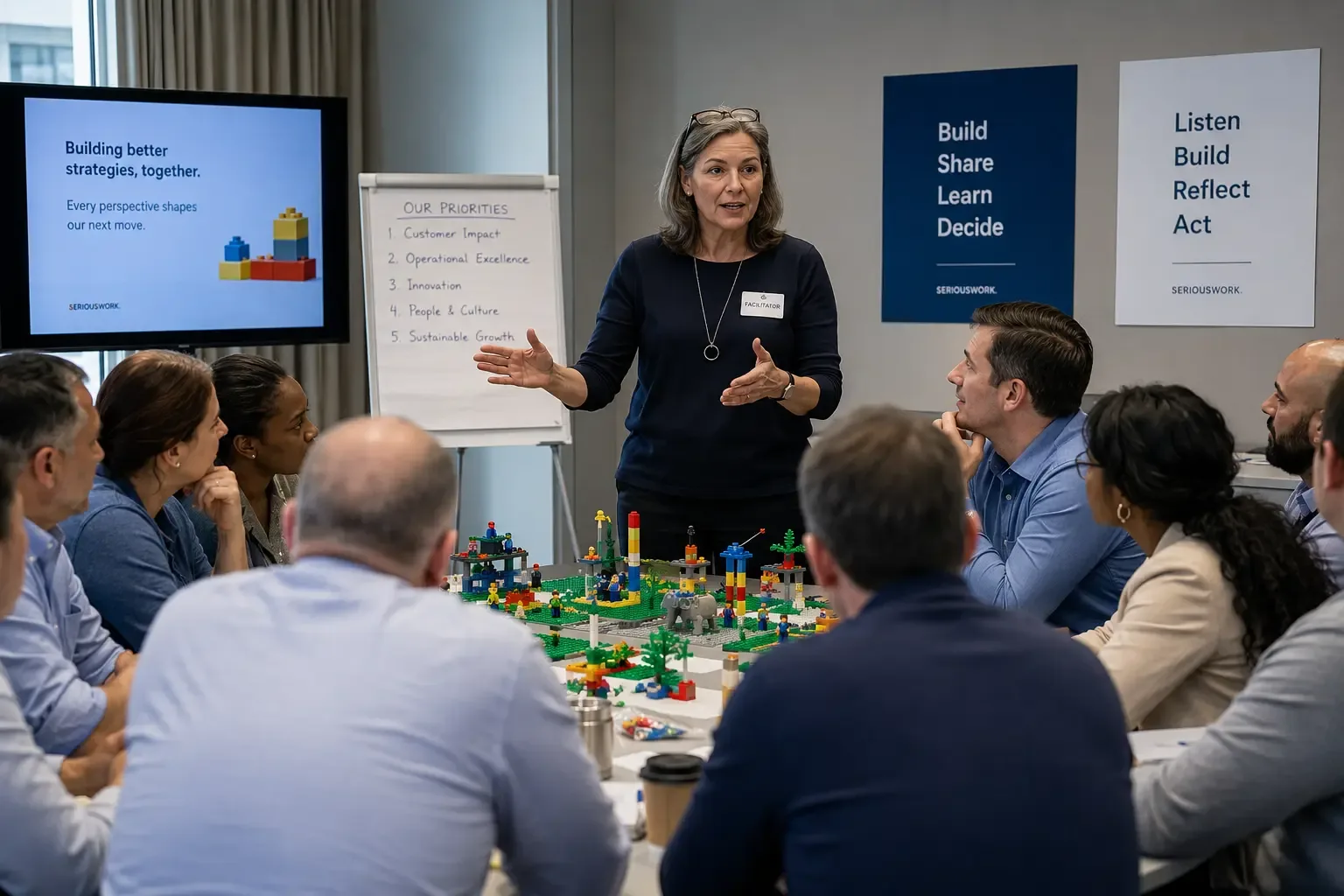
How to Verify a Trainer’s Credentials: A Five-Step Check
Verification takes less than an hour and can save you thousands. As a result, we recommend every buyer runs this check before paying any provider.
Click the ‘+’ button below to explore the detailed workshop stages.
1. Trace the Lineage & 2. Check the Delivery Record
1. Trace the lineage (10 minutes): Search the trainer’s name alongside “LEGO SERIOUS PLAY” and look for history that predates their current business. For Master Trainer claims, look for evidence of involvement in the pre-2010 training programs.
2. Check the delivery record (15 minutes): Look for named clients, conference presentations, academic appointments, or published work. Then confirm at least two of them independently — for instance, on the client’s or event’s own website.
3. Read Graduate Evidence & 4. Examine the Curriculum
3. Read graduate evidence (10 minutes): Look for testimonials from named, checkable facilitators across multiple countries. Vague or anonymous praise is a warning sign.
4. Examine the curriculum (15 minutes): Request the full outline, the hours involved, and what is assessed. A credible provider shares this without hesitation.
5. Test the Claims Directly
5. Test the claims directly (10 minutes): Ask the provider your hardest question: “Who trained you, and when?” Finally, be wary of anyone claiming current LEGO® Group approval — since 2010, no such approval exists for anyone.
Where Serious Play Business Stands on This Test
We publish this framework because we pass it, and we believe every provider should have to. Here is our record against the four questions above.
Our answers, on the record
Serious Play Business has trained facilitators for over 18 years, with more than 2,000 certified across 25+ countries. Training is led by Dr. Denise Meyerson, one of only four Master Trainers of the methodology selected by the LEGO® Group before the method went open source. Her delivery record spans Microsoft, Coca-Cola, SAP, and Cisco, alongside work with Virginia Commonwealth University, Kaiser Permanente, Capgemini, and the US Air Force. Furthermore, our certification is results-focused: candidates submit assessed session plans and facilitation videos and receive individual feedback.
Finally, a word on price. We are determined to open the methodology to more than a select few who can afford very high price points. Accessibility is a deliberate choice, not a compromise — the assessment standards stay the same. For a full walkthrough of how to compare programs on format, cost, and curriculum, read our companion guide on how to choose a LEGO® SERIOUS PLAY® certification.
Put Our Credentials to the Test
Bring the five-step verification check from this guide to your first conversation with us. We would rather earn your trust with evidence than with a title.
To understand the full methodology behind the workshop design described above, read our complete guide to the LEGO® SERIOUS PLAY® method.
Frequently Asked Questions
What is a Master Trainer of LEGO® SERIOUS PLAY®?
A Master Trainer is a member of the small original group who developed and delivered the LEGO® Group’s global facilitator training programs before the method went open source in 2010. The title is historical rather than a current appointment. Therefore, its weight depends on the individual’s verifiable pre-2010 involvement and their delivery record since.
Does it matter who trains me in LEGO® SERIOUS PLAY®?
Yes, more than any other factor. The method depends on facilitation judgment: adapting to group sizes, contexts, and live dynamics. That judgment can only be taught by someone who has exercised it for years. As a result, your trainer’s real-world record shapes the quality of everything you learn.
What should I look for when choosing a certification provider?
Check four things. First, longevity — how many years the provider has trained facilitators. Second, real-world facilitation experience with named, verifiable clients. Third, lineage in the method, ideally traceable to the pre-2010 Master Trainer generation. Fourth, results-focused certification with assessed practical work, not just course attendance.
How many years of experience should a facilitator trainer have?
There is no regulated minimum. However, the method rewards long practice. A trainer with 18+ years of global delivery has adapted the method across industries, cultures, and group types. In contrast, a trainer certified last year is still building the judgment they are selling.
Are any trainers officially approved by the LEGO® Group?
No. Since the 2010 Creative Commons release, there are no LEGO®-appointed trainers, no official training board, and no providers with special status. Every credential on the market today is issued by a private provider or community body. Consequently, any claim of current LEGO® approval is a red flag.
Why do certification prices vary so much between providers?
Prices reflect format, brand positioning, and business model — not always training quality. In-person intensives carry venue and travel economics. Meanwhile, some providers price on exclusivity. Others, including Serious Play Business, deliberately price for accessibility to open the methodology to more professionals. So compare assessment rigor and trainer credentials first, then price.