
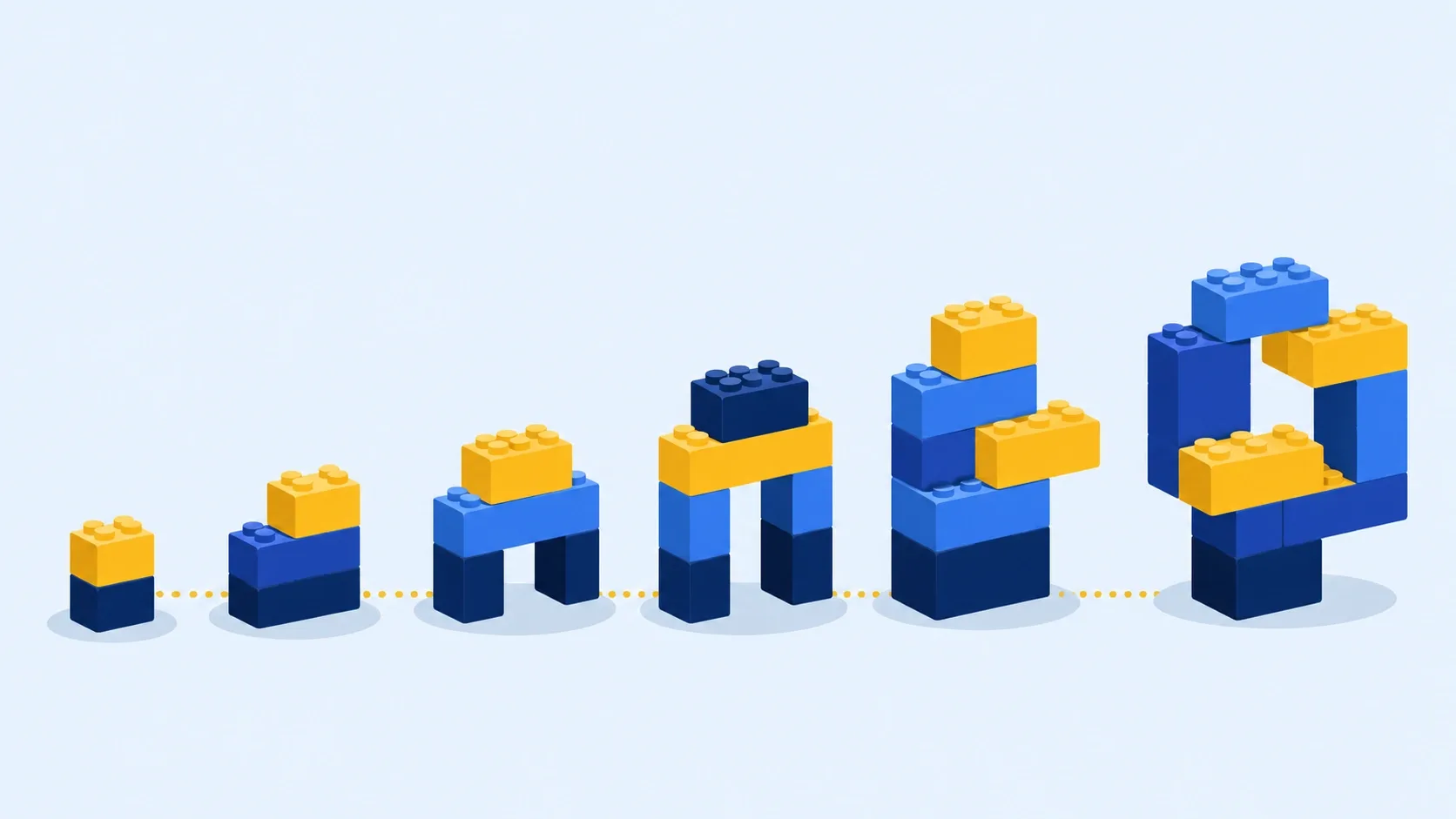
LEGO® Serious Play® Exercises: 6 Skill-Building Activities and What Each One Teaches
LEGO® Serious Play® sessions open with short skill-building exercises that teach a group three things: how to build, how to use a model as a metaphor, and how to tell a story with it. The sequence most facilitators use comes from the open-source guide to LEGO® SERIOUS PLAY®, published by the LEGO® Group in 2010 under a Creative Commons licence: build a tower, build a creature, turn it into a metaphor, then build a story.
This guide covers six exercises, what each one teaches, and a 60-minute session plan you can adapt. It also explains where skill building ends and a real workshop begins, because the exercises are preparation for the method, not the method itself.
The core LEGO® Serious Play® exercises are: build a duck, build a tower, build a creature, turn the creature into a metaphor, build “my Monday mornings,” and build connections between models. Each follows the same three phases: the facilitator poses a challenge, everyone builds individually, and each person shares the story of their model. Together they take most groups 60 to 90 minutes.
- Skill-building exercises come first in every session, because the method only works once people can build, use metaphor and tell a story.
- Every exercise follows the same three phases: challenge, build, share. Everyone builds, and everyone shares.
- The exercises are preparation, not a workshop. A full LEGO® Serious Play® workshop usually runs at least three to four hours.
What Are LEGO® Serious Play® Skill-Building Exercises?
Skill-building exercises are short, low-stakes builds that teach a group how the LEGO® Serious Play® method works before they tackle a real question. They run at the start of every session, even with experienced groups.
The open-source guide to LEGO® SERIOUS PLAY® is clear that this step can't be skipped or explained verbally. People have to experience building, sharing and listening before the method gives them anything useful.
According to the guide, skill building introduces five things:
- The three phases of the process: challenge, build, share
- The etiquette, such as “there are no wrong answers” and “think with your hands”
- Using bricks as personal metaphors
- Using models to share thoughts and tell stories
- Using models and stories for active listening and constructive dialogue

The 6 Exercises at a Glance
The table below shows each exercise, the skill it builds, and where it sits in a session. Exercises two to five follow the order in the open-source guide.
| Exercise | What it teaches | Where it fits |
|---|---|---|
| 1. Build a duck | Everyone builds differently from the same bricks | Very first build, to lower nerves |
| 2. Build a tower | Anyone can build; people quickly attach to their own models | First exercise in the open-source sequence |
| 3. Build a creature | Building something literal, as a baseline | Set-up for the metaphor exercise |
| 4. Turn the creature into a metaphor | A model can stand for an idea, not just an object | The turning point of skill building |
| 5. Build “my Monday mornings” | A model can carry a story and a personal experience | Last core skill-building exercise |
| 6. Build connections between models | Relationships between ideas can be shown and discussed | Bridge into the real workshop |
How Each Exercise Works
Each exercise below follows the same rhythm: you pose the challenge and set the time, everyone builds at once, then each person shares in turn. Questions go to the model and the story, never to the person.
1. Build a Duck
Give everyone the same small handful of bricks and ask them to build a duck. When the models go side by side, no two ducks match, which makes the point that there is no single right answer before anyone has said it.
Serious Play Business uses its own “What the Duck™” activities for this, drawn from Dr. Denise Meyerson's book What the Duck.
2. Build a Tower
Ask each person to build a tower. The guide suggests the facilitator then “tests” the towers for stability, so some break.
People are usually sorry to see their tower fall, and that is the lesson: we attach to things we build with our own hands. Ask each person to share something about their tower, so the sharing habit starts from the first build.
3. Build a Creature
Ask everyone to build a creature, any creature, as a normal, literal model. This gives the group a familiar starting point before the shift to metaphor.
4. Turn the Creature Into a Metaphor
Give participants four minutes to turn their creature into the ideal boss, or the worst boss they can imagine. The guide calls this a turning point, because people start building meaning rather than objects.
When everyone shares, point out the metaphorical details in each model, such as big ears for a boss who listens. Our guide to metaphor in LEGO® Serious Play® goes deeper on this step.
The metaphor exercise is the turning point of skill building: participants stop building objects and start building meaning, which is what every later workshop question depends on.
5. Build “My Monday Mornings”
Ask each person to build a model of their Monday mornings. This adds storytelling: people see that a model can hold a sequence of events and a personal experience, not just one idea.
6. Build Connections Between Models
Ask participants to place their models in relation to each other, or to build a physical link between two models that shows the relationship. Distance, direction and the link itself all carry meaning.
The open-source guide describes connections as part of the workshop itself rather than skill building. We include it here because it is the natural bridge from warm-up builds to the real question.
How to Run a 60-Minute Skills-Building Session
The plan below fits the five core exercises into an hour, which sits at the short end of the 60 to 90 minutes the open-source guide gives for skill building. Use it as the opening of a longer workshop or as a taster for a team that has never tried the method.
Keep the group to four to eight people per facilitator, the size the guide recommends. Larger groups make the sharing rounds drag.
Set the scene and the etiquette
Explain the three phases and the core etiquette: the model is your answer, there are no wrong answers, and if you're stuck, start building. Keep it short; the builds will teach the rest.
Build a duck
A quick first build from the same handful of bricks. Line the ducks up and let the group notice the differences.
Build and test a tower
Everyone builds a tower, you test them for stability, and each person shares one thought about their tower. This is the first full challenge, build and share cycle.
Build a creature, then turn it into a metaphor
A literal creature first, then four minutes to turn it into the ideal or worst boss. Go round the table and highlight the metaphors people used.
Build “my Monday mornings”
Each person builds and tells the story of their Monday mornings. Ask questions about the model, such as “what is this part?”, rather than about the person.
Reflect and close
Ask the group what they noticed about building, sharing and listening. Note where people felt most comfortable; that tells you how ready the group is for a real workshop question.
Can You Run These Exercises Online?
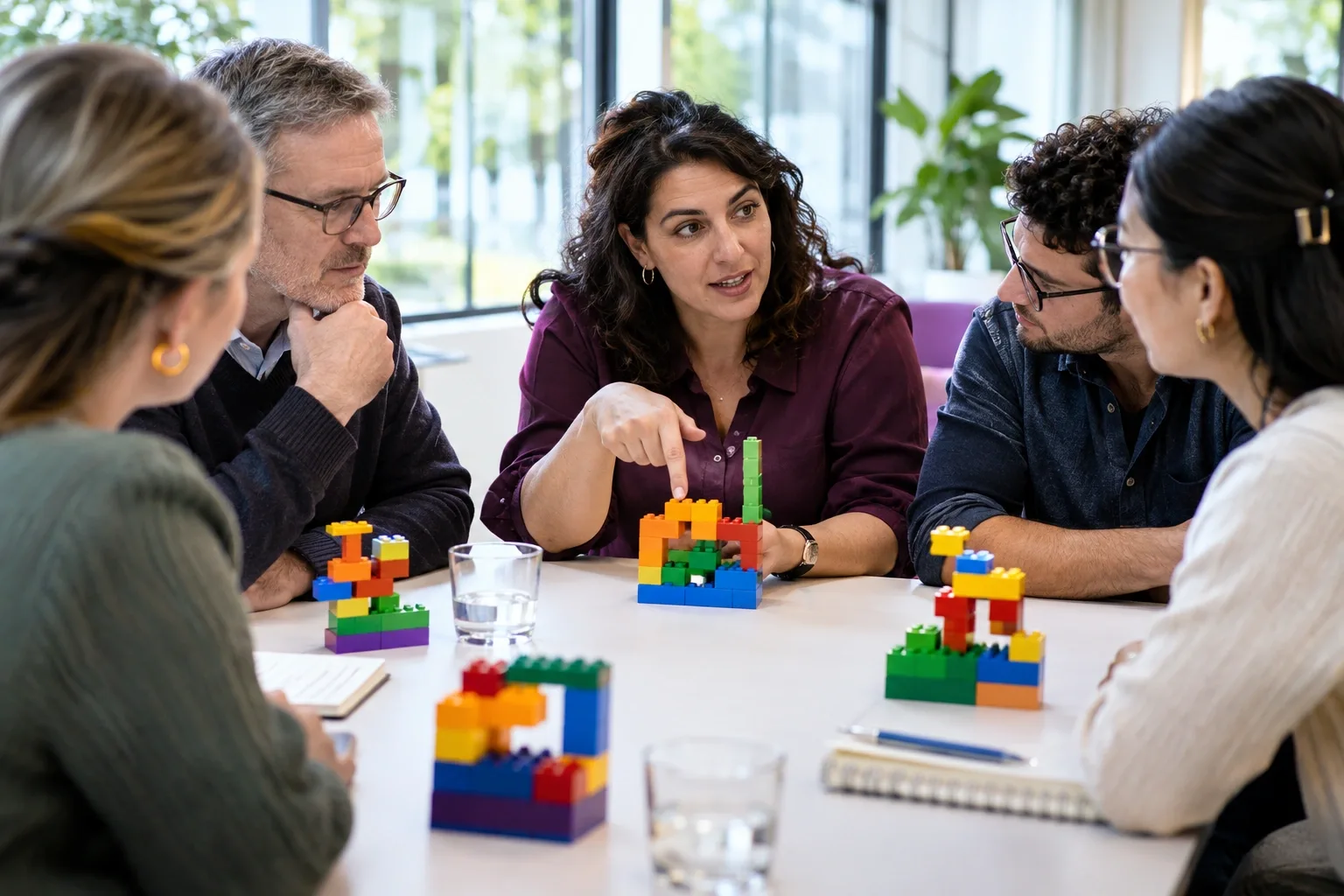
Yes. The exercises work online as long as every participant has their own set of bricks before the session and can show their model clearly on camera.
- Send brick sets in advance, so no one is building from whatever they find at home
- Ask people to hold their model up to the camera when they share
- Allow a little more time for each sharing round than you would in a room
Our guide to online and virtual LEGO® Serious Play® workshops covers set-up in more detail.
What Each Exercise Teaches a Group
Beyond the individual skills, the sequence changes how a group talks. Because everyone builds before anyone speaks, every person arrives at the discussion with something on the table.
The open-source guide notes that this gives quieter team members a voice and gives senior or dominant members a chance to hear views they might otherwise miss. By the end of skill building, the group has practiced the habits the real workshop needs:
- Building before talking
- Listening to every story without interpreting someone else's model
- Asking about the model, not the person
- Accepting that different views are useful, not wrong
In a LEGO® Serious Play® session, everyone builds before anyone speaks, so every person brings a finished idea to the discussion instead of reacting to the loudest voice.
For the questions that work best once a group is ready, see our list of the best questions for LEGO® Serious Play® sessions.
How to Learn to Facilitate These Exercises
Reading about the exercises is a start, but the open-source guide itself recommends training and hands-on practice before facilitating. The hard part isn't the instructions; it's pacing the group, asking good questions and knowing what to do when a build brings up something unexpected.
Three ways to go further with Serious Play Business:
- Free webinar, November 17: “LEGO® Serious Play® Method: from Bricks to Breakthroughs” at 11am PST / 2pm EST / 8pm CET. Reserve your spot.
- Free trial: see how the course is structured and watch recorded live sessions. Start the free trial.
- Certification: 40+ hours of self-paced content, ready-to-use session plans and our “What the Duck™” activities. Compare the certifications.
Bring the Method Into Your Next Session
Want a facilitator to run the full workshop for your team, or a session plan built around your own question? Tell us what you need.
To understand the full methodology behind the workshop design described above, read the LEGO® Serious Play® method explained.
Frequently asked questions
What is the first exercise in a LEGO® Serious Play® session?
In the open-source guide published by the LEGO® Group, the first exercise is building a tower. It shows everyone they can build, and the stability test shows how quickly people attach to their own models. Many facilitators add a quick duck build before it.
How long does LEGO® Serious Play® skill building take?
The open-source guide gives 60 to 90 minutes for skill building. A focused group can cover the five core exercises in about an hour.
How many people can take part in these exercises?
The open-source guide recommends four to eight participants per facilitator. Larger groups make the sharing rounds too long and harder to follow.
Are skill-building exercises the same as a LEGO® Serious Play® workshop?
No. The exercises prepare a group for the method. A full workshop applies it to a real question and usually runs at least three to four hours, according to the open-source guide.
Can LEGO® Serious Play® exercises be run online?
Yes, as long as each participant has their own bricks before the session and shares their model on camera. Serious Play Business certification includes guidance and a bonus module on facilitating sessions for virtual teams.
Do I need to be certified to run these exercises?
You can practice the exercises without certification, but the open-source guide recommends training before facilitating real workshops. Certification teaches the pacing, questioning and session design that turn the exercises into results.