
How to Run a Leadership Purpose Workshop: A Why, How, What Session Plan
A leadership purpose workshop helps a senior team agree on why it exists, how it works, and what it delivers. The why, how, what structure, popularized by Simon Sinek's Golden Circle, gives the session a clear shape; the hard part is getting every leader's real view on the table before the team settles on a slogan.
This guide gives you a half-day session plan built on LEGO® Serious Play®, facilitator prompts for each stage, ways to stop leaders defaulting to corporate language, and what to do with the outputs afterwards.
To run a leadership purpose workshop, take the team through three questions in order: why do we exist, how do we work at our best, and what do we deliver. Have each leader build an individual answer before any discussion, then combine the individual answers into one shared model. Plan for about three and a half hours, including skill building at the start.
- Work from the inside out: agree on why before moving to how and what.
- Every leader builds an individual answer before the group builds a shared one, so the most senior voice doesn't set the purpose by default.
- Capture each model with its story, then turn the shared purpose into a few concrete commitments with owners.
What Is a Why, How, What Exercise?
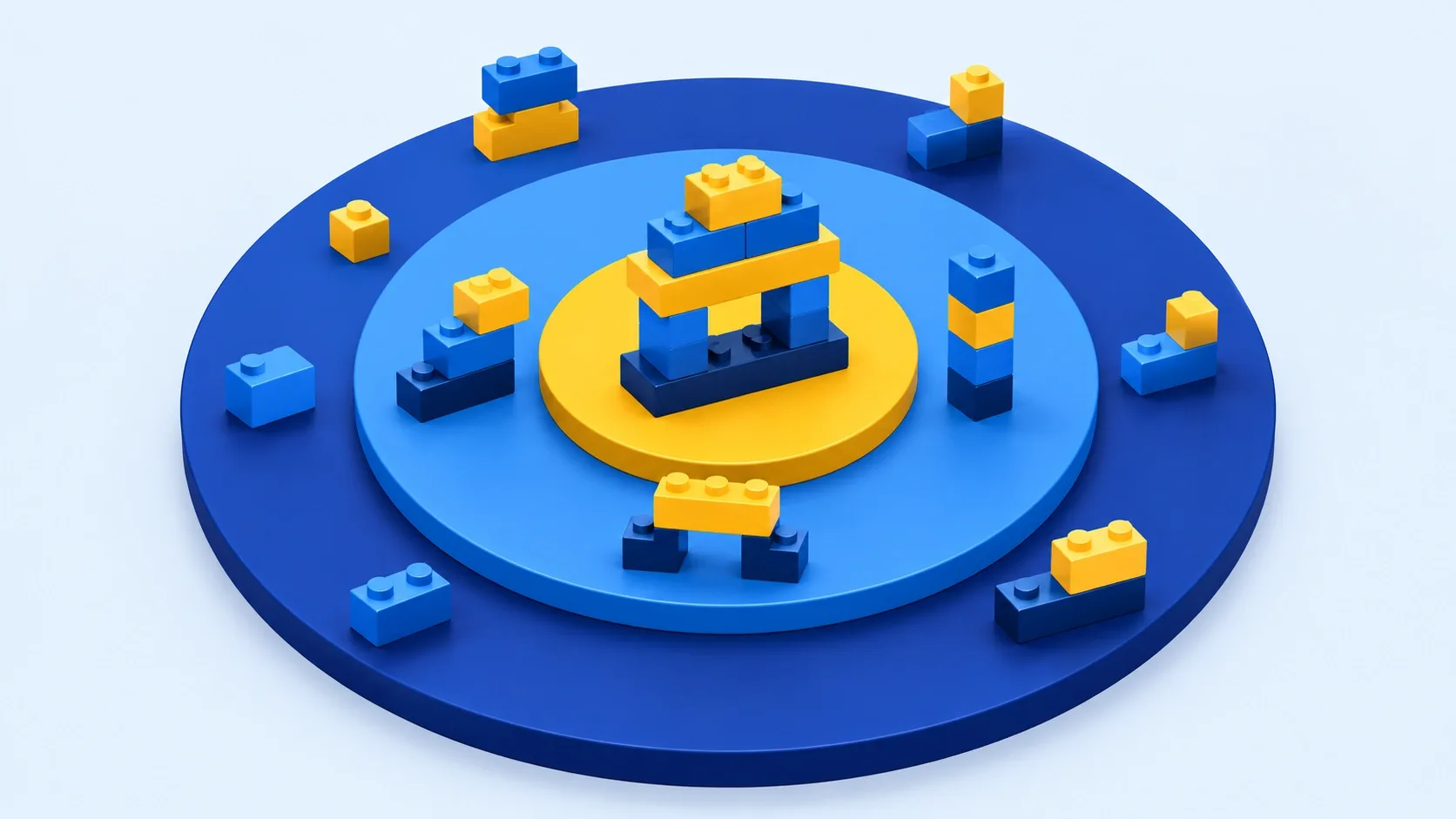
A why, how, what exercise asks a team three questions, in order, from the inside out. It is often drawn as three concentric circles, an idea Simon Sinek popularized as the Golden Circle in his 2009 book Start With Why.
If you'd rather have a neutral facilitator run this session for your leadership team, you can hire a LEGO® Serious Play® facilitator through us. We usually match you with a certified facilitator within 24–48 hours.
- Why: the purpose, the reason the team exists beyond its targets
- How: the way the team works when it is at its best
- What: the results, services or decisions the team delivers
Most leadership teams find “what” easy and “why” hard. Starting with why forces the conversation that usually gets skipped.
Why Leadership Teams Struggle to Agree on Purpose
Purpose conversations often stall for predictable reasons. Leaders reach for safe corporate language, the most senior person speaks first and sets the frame, and quieter members agree in the room but hold different views afterwards.
The open-source guide to LEGO® SERIOUS PLAY® describes exactly this pattern: in typical workplace discussions, a dominant personality identifies the key issues at the start, and the rest of the conversation follows. Building first changes that, because every leader brings a finished idea to the table before anyone speaks.
Leadership teams rarely disagree about what they deliver. They disagree, often silently, about why they exist, which is why a purpose workshop has to surface every leader's view before the group settles on one.
Session Plan: A Leadership Purpose Workshop
The plan below runs about three and a half hours, in line with the open-source guide's note that a LEGO® Serious Play® workshop takes at least three to four hours. It follows the guide's principle that every building task is done individually before it is done as a group.
It works best for leadership teams of four to eight people with one facilitator, the group size the guide recommends.
Skill building
Take the team through the core skill-building exercises: a tower, a creature turned into a metaphor, and a short story build. This is not optional with senior teams; it is what gets them past the “it's just bricks” reaction. Our guide to LEGO® Serious Play® exercises covers each one.
Build your why
Each leader builds a model of why this team exists. Each shares the story of their model in turn, and the facilitator asks questions about the model, not the person.
Add your how
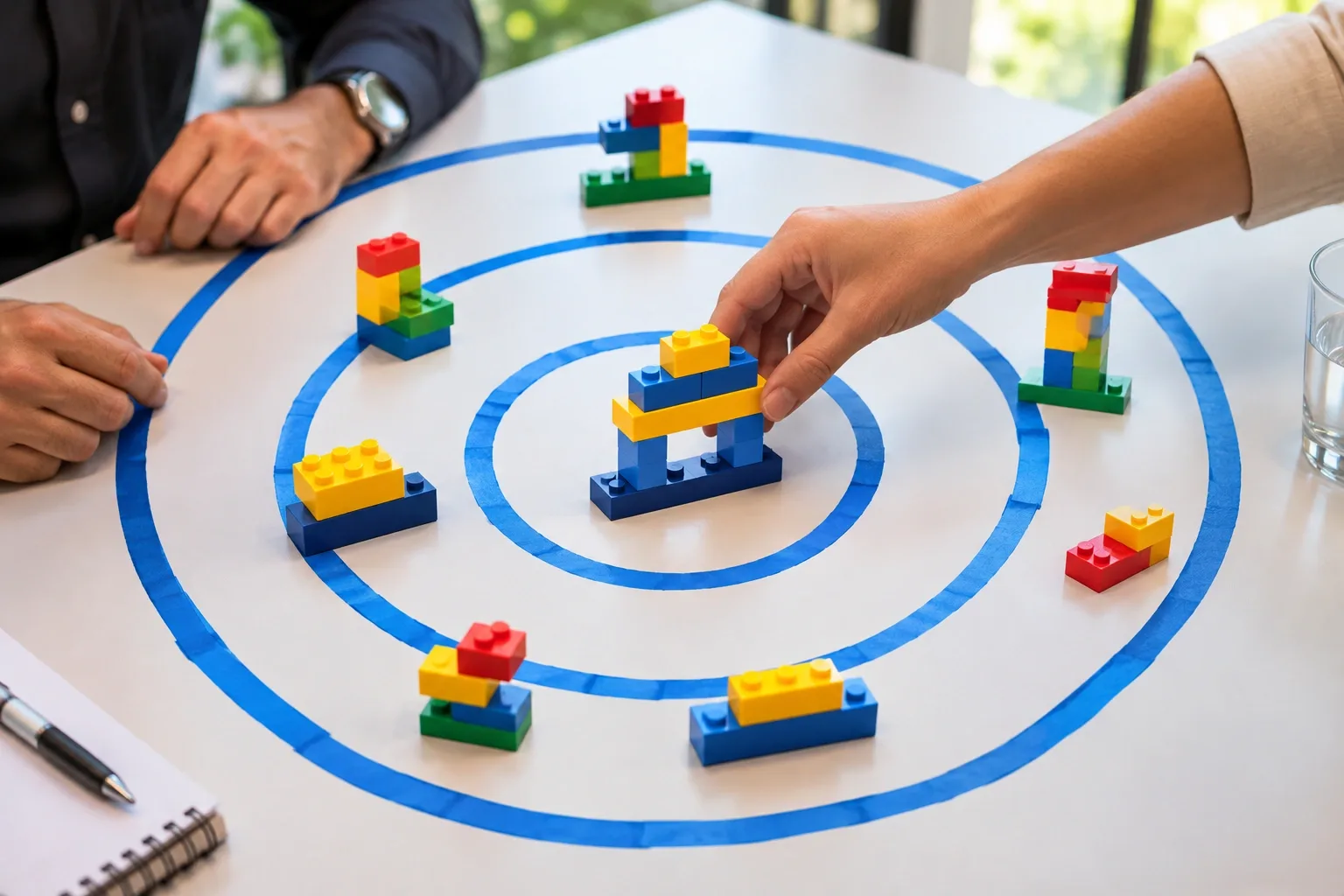
Each leader adds to their model to show how the team works when it is at its best. Place the models on the three circles if you've marked them on the table.
Add your what
Each leader adds what the team delivers. By now, differences between leaders' views of purpose are visible on the table.
Build a shared why
The team combines elements from the individual models into one shared model of why it exists. This step needs a skilled facilitator: the goal is a model every leader recognizes as theirs, not the lowest common denominator.
Turn the model into commitments
A volunteer tells the story of the shared model. The team then writes a purpose statement from that story and agrees two or three commitments, each with an owner and a date.

Facilitator Prompts for Each Stage
The building challenge decides the quality of the answers. Use open questions that invite reflection rather than a correct answer.
| Stage | Building challenge | Follow-up questions |
|---|---|---|
| Why | Build a model of why this team exists, beyond hitting its targets. | What is this part? Who benefits here? What would be missing if this team didn't exist? |
| How | Add to your model to show how this team works when it is at its best. | What does that look like on a hard day? Where does this part connect to your why? |
| What | Add what this team delivers that no one else in the organization does. | Who receives this? How would they describe it? |
| Shared why | Build one model of why this team exists that everyone here can stand behind. | Whose idea is this part? What did you leave out, and why? |
How to Stop Leaders Defaulting to Slogans
Senior teams often reach for words that sound right on a poster but mean little in practice. A few habits keep the conversation honest:
- Ask about the model, not the words: “What is this tall piece?” gets a more specific answer than “What do you mean by excellence?”
- Never interpret someone's model: the open-source guide's etiquette is that only the builder knows what a model means
- Hold the statement until the end: write the purpose statement from the shared model's story, not before it
- Notice what is missing: ask what a leader decided not to build; that is often the real disagreement
Asking a leader about a specific part of their model gets a more honest answer than asking them to define an abstract word, because the model gives them something concrete to describe.
What to Do With the Outputs
A purpose workshop only matters if the result shows up in how the team works. Before you close:
- Photograph every model, with its story written beside it
- Write up the purpose statement in the team's own words from the shared model
- Agree two or three commitments, each with an owner and a date
- Schedule a short check-in, a few weeks out, to review progress against the commitments
For more on building leadership capability beyond a single session, see our leadership team workshop guide and trust-building workshop for leaders.
Get the Leadership Template or Book a Facilitator
Three ways to run this session with support:
- Leadership Template: a why, how and what circle exercise with full facilitator instructions and session timings, part of the Facilitator Master Pack. During our Black Friday offer, the Master Pack is free with code BF26 on either certification. See the offer.
- Leadership Development module ($90 USD): advanced LEGO® Serious Play® for leadership programs, for facilitators who already know the basics. See the Specialist Modules.
- Hire a facilitator: a neutral facilitator is often the better choice for a senior team, because no one in the room has to manage their own boss. Request a facilitator.
Run Your Leadership Purpose Session With Us
Tell us about your leadership team and what you want them to agree on, and we'll design the session around it.
To understand the full methodology behind the workshop design described above, read the LEGO® Serious Play® method explained.
Frequently asked questions
What is a why, how, what exercise?
It asks a team three questions in order: why it exists, how it works at its best, and what it delivers. It is often drawn as three concentric circles, an idea Simon Sinek popularized as the Golden Circle.
How long does a leadership purpose workshop take?
The plan in this guide runs about three and a half hours, including an hour of skill building. The open-source guide to LEGO® Serious Play® says a workshop takes at least three to four hours.
How many leaders should attend?
Four to eight is ideal for one facilitator, the group size the open-source guide recommends. Larger leadership groups need more facilitators or a different design.
Why start with why instead of what?
Most leadership teams already agree on what they deliver. Starting with why brings out the disagreements about purpose that usually go unspoken.
How do you stop leaders using vague corporate language?
Ask about specific parts of their models rather than abstract words, never interpret someone else's model, and write the purpose statement only at the end, from the shared model's story.
Should an internal leader facilitate their own team's purpose workshop?
It is usually better to use a neutral facilitator. A leader facilitating their own team is part of the dynamics in the room, which makes honest disagreement harder.