

Team Culture•April 15, 2026
The Advantages of LEGO® SERIOUS PLAY® for Organizational Alignment, Strategy, and Leadership
The advantages of LEGO® SERIOUS PLAY® remain strictly organizational, absolutely not merely recreational.
Read more →Practical thinking on the LEGO® Serious Play® method, facilitation and building better teams.
The advantages of LEGO® SERIOUS PLAY® remain strictly organizational, absolutely not merely recreational.
Read more →
Organizational alignment defines the exact degree to which strategy, priorities, and daily behaviors move in the same direction.
Read more →
Return-to-office alignment presents a massive leadership challenge today. Specifically, organizations struggle with far more than just physical location.
Read more →
Strategic facilitation operates as a highly structured practice. Specifically, it actively helps leaders and teams think much more clearly.
Read more →
Organizational resilience is the vital capacity of a business to efficiently adapt, recover, learn, and continue performing under massive pressure.
Read more →
Many companies fail at leadership development. They focus solely on static competencies, dry models, or abstract theory.
Read more →
Psychological safety is the shared belief that people can confidently speak honestly.
Read more →
Traditional meetings fail for a structural reason. Specifically, they depend too heavily on verbal speed, strict hierarchy, and abstract discussion.
Read more →
The hand-mind connection serves as the core cognitive principle behind the LEGO® SERIOUS PLAY® Method. Consequently, it makes this tool highly effective in professional business settings.
Read more →
LEGO® SERIOUS PLAY® for organizations actively helps teams make assumptions visible. Furthermore, it aligns perspectives and clarifies highly complex business challenges.
Read more →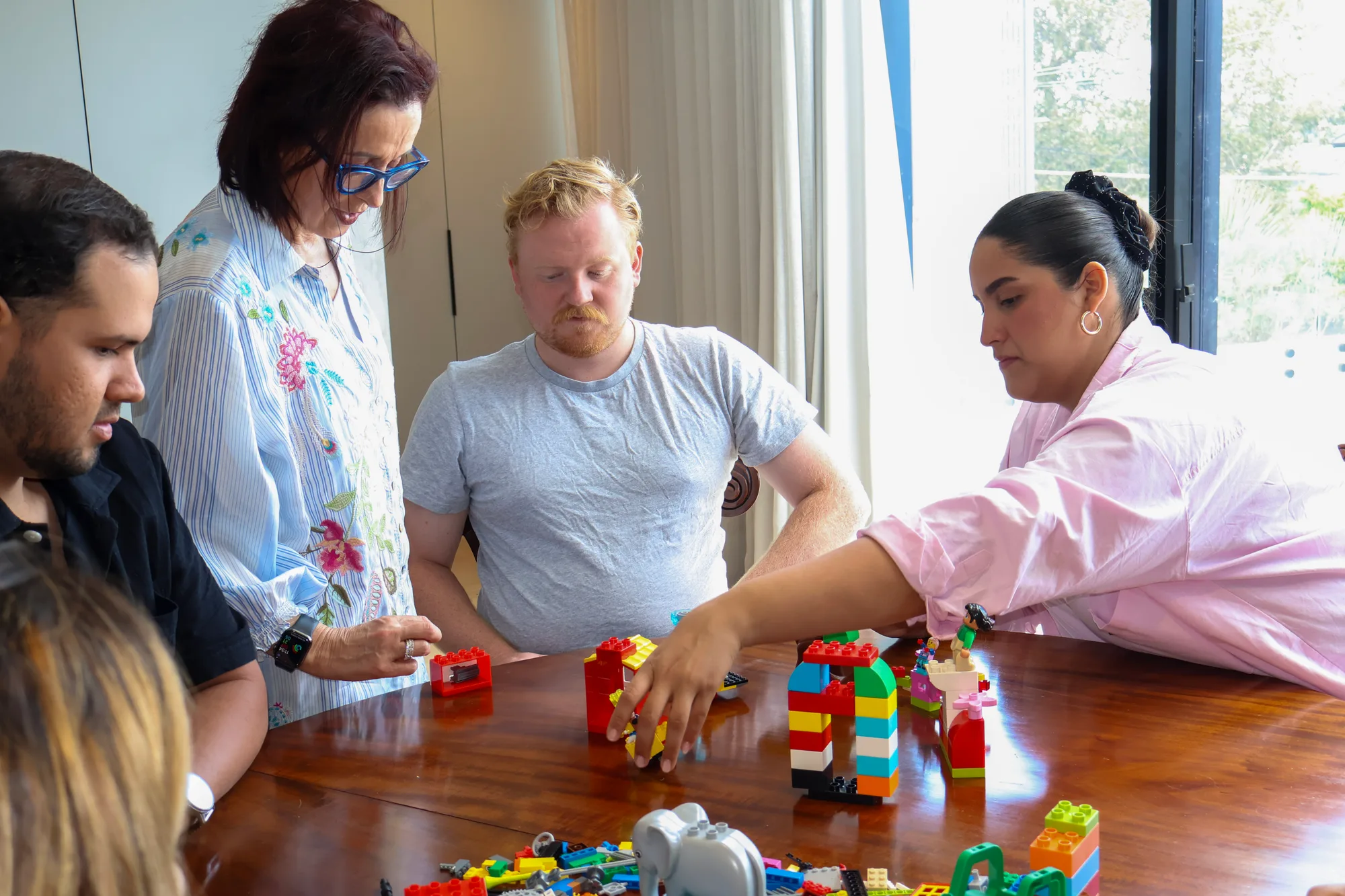
Organizational narrative alignment ensures that leaders, teams, and departments share a clear, coherent understanding of what the organization represents.
Read more →
A Leadership Alignment Model is a structured framework that enables senior leaders to externalize, compare, and synchronize their interpretations of strategy, priorities, and organizational direction.
Read more →